The watch world runs on folklore. Some of it is harmless romance; some of it costs people money or ruins watches. Here are the myths and mistakes we see most often — and what is actually true.
Myth 1: "More jewels means a better watch"
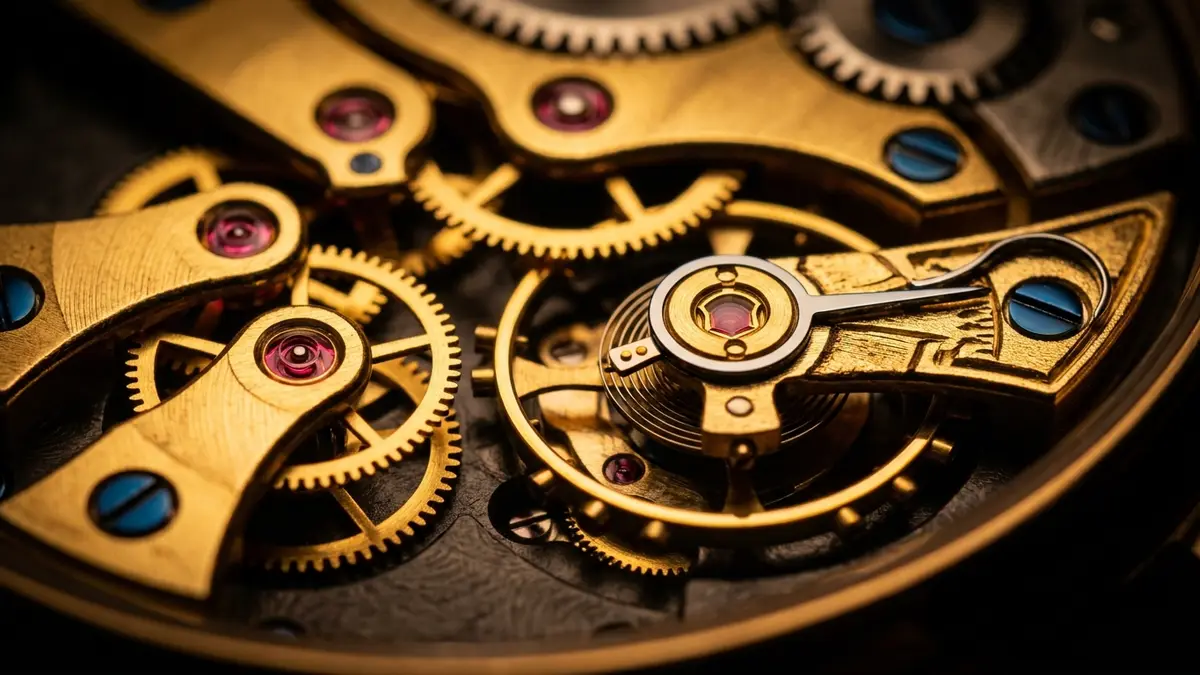
Jewels are synthetic rubies used as bearings at points of friction. A simple automatic needs about 17–25 of them to function well. Beyond that, extra jewels only make sense if the movement has extra functions — a chronograph or complex calendar may genuinely need 30–50.
In the 1960s and 70s, some manufacturers added non-functional jewels purely for marketing, leading to "100 jewel" watches that were no better than a 17-jewel one. Today, look at the caliber, its power reserve and its accuracy rating — not the jewel count.
Myth 2: "Quartz watches are cheap and inferior"
Quartz movements are dramatically more accurate than any mechanical watch — a standard quartz drifts around ±15 seconds per month, while high-accuracy quartz (HAQ) such as Grand Seiko's 9F calibers is rated to within ±10 seconds per year. Cartier's Tank Must, many Grand Seikos and Breitling's SuperQuartz models all use quartz.
What is true is that mechanical watches offer a different kind of value: craftsmanship, longevity and the romance of a machine. That is a preference, not a hierarchy. Read the full comparison: mechanical vs quartz.
Myth 3: "30 m water resistance means I can swim to 30 metres"
This is the most expensive myth. The depth figure is the pressure a watch withstood statically in a lab test, when new. Real life adds movement, temperature shock, soap and ageing gaskets.
| Rating on the watch | What it really means |
|---|---|
| 30 m / 3 ATM / "Water Resistant" | Rain, splashes, hand washing. No swimming. |
| 50 m / 5 ATM | Brief swimming in a pool at most; no diving or showers. |
| 100 m / 10 ATM | Swimming and snorkelling. |
| 200 m / 20 ATM | Recreational scuba diving. |
| ISO 6425 "Diver's 200 m" | Tested and certified for diving. |
More in battery and water resistance.
Myth 4: "Swiss Made means made entirely in Switzerland"
Under Swiss law, a watch can carry "Swiss Made" if at least 60% of its manufacturing costs (for mechanical watches) are Swiss, the movement is Swiss, and final assembly and inspection happen in Switzerland. Cases, dials and bracelets can legally come from elsewhere. That does not make Swiss watches bad — just don't assume the label guarantees everything.
Myth 5: "Automatic watches never need winding"
An automatic winds itself only while you wear it — and only if you move enough. Desk workers who barely move their wrist may find their watch slowly running down. If the watch stops, give the crown 20–40 turns to start it fully, then set the time. See how to wind and set a watch.
Myth 6: "In-house movements are always better"
In-house calibers can be superb, and they add exclusivity. But proven base movements from ETA, Sellita, Seiko and Miyota are robust, cheap to service and any watchmaker can repair them. A first-generation in-house movement from a small brand can be less reliable and far more expensive to service. Details in in-house vs base calibers.
Myth 7: "Bigger watches look more masculine"
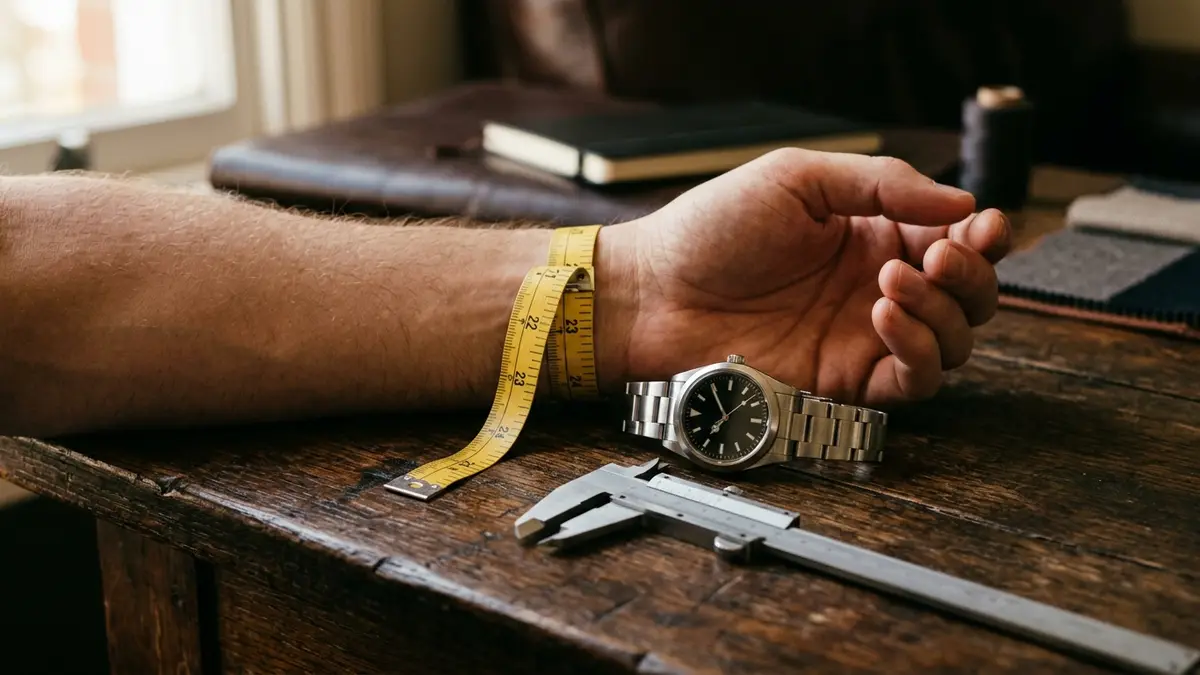
A watch that overhangs your wrist looks borrowed, not bold. Proportion is what reads as confident. Many of history's most iconic men's watches — the original Submariner, Speedmaster and Datejust — measured 36–40 mm. Use the size calculator to find your range.
Common beginner mistakes
Mistake 8: Changing the date at the wrong time
On many mechanical watches, adjusting the quick-set date between roughly 9 pm and 3 am — when the date-change gears are engaged — can damage the movement. Set the time to 6 o'clock first, then change the date. Full instructions in our winding guide.
Mistake 9: Operating the crown or pushers underwater
Unless the manufacturer explicitly allows it, never pull out the crown or press chronograph pushers underwater. You are opening a path for water straight into the case.
Mistake 10: Forgetting to screw the crown back down
A screw-down crown only protects the watch when it is screwed down. Make it a habit every time you set the time.
Mistake 11: Taking a watch into the sauna or hot shower
Heat expands the case and gaskets at different rates, and steam and soap degrade seals. Even a 300 m diver is best left outside the sauna.
Mistake 12: Leaving a watch next to magnets
Phone cases with magnetic clasps, laptop speakers, tablet covers and handbag clasps can magnetise a mechanical watch, making it suddenly gain minutes per day. It is easily fixed by demagnetising — read storage and magnetism.
The bottom line
Buy the watch that suits your wrist and your life, understand what the specifications really mean, and treat marketing claims with healthy scepticism. That alone puts you ahead of most first-time buyers.
FAQ
Can I shower with a 50 m water-resistant watch?
It is not recommended. Hot water, steam and soap degrade gaskets over time. For showering and swimming, choose at least 100 m and keep the crown fully pushed in or screwed down.
Do more jewels make a watch more accurate?
No. Jewels reduce friction and wear at pivot points. Once the necessary pivots are jewelled, adding more does nothing for accuracy.