A watch is often the only piece of jewellery a man wears, so it has a big effect on how an outfit reads. The good news: a few simple principles cover 95% of situations. Master them, then feel free to break them with intention.
Rule 1: Match your metals
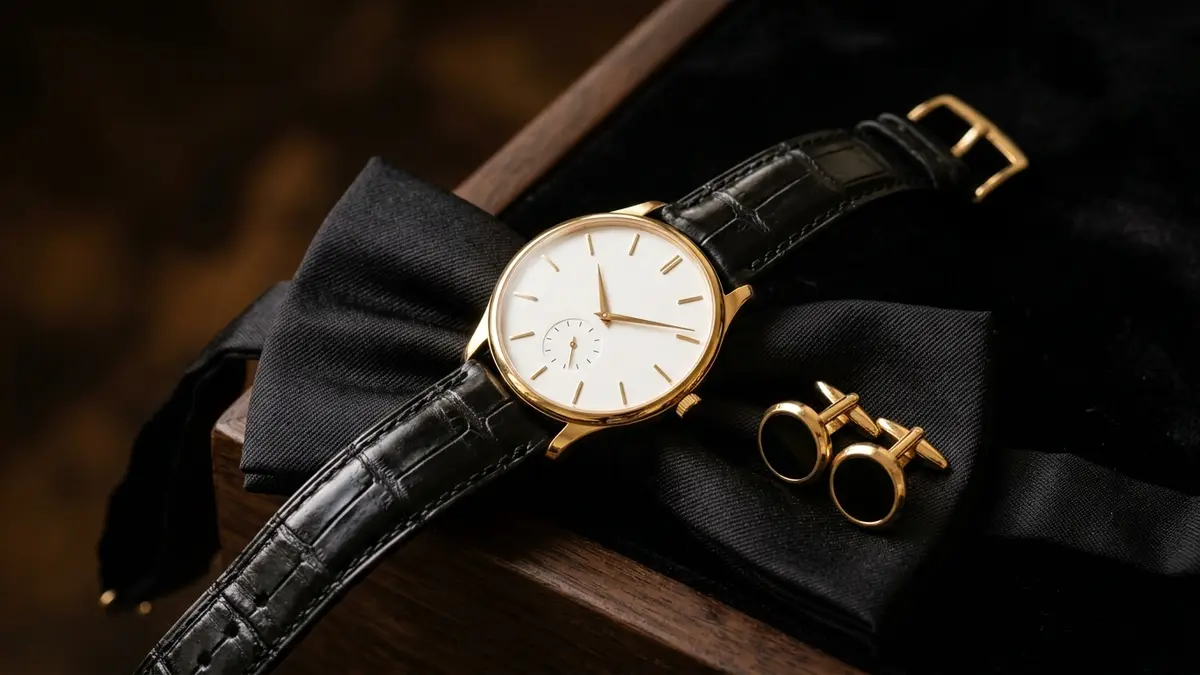
Keep the metal of your watch case in the same family as your other visible metals: belt buckle, cufflinks, tie bar, rings, glasses frames and bag hardware.
| Watch metal | Pairs with | Colour temperature |
|---|---|---|
| Steel, white gold, platinum, titanium | Silver, chrome, gunmetal hardware | Cool |
| Yellow gold, gold PVD | Brass, gold hardware | Warm |
| Rose / red gold, bronze | Rose gold, copper, brass | Warm |
| Black PVD / DLC, ceramic | Black or gunmetal hardware | Neutral |
Exceptions: a wedding band can be any metal, and two-tone watches (steel and gold) bridge both families. For casual outfits, don't obsess — the rule matters most in formal and business settings.
Rule 2: Match your leathers
When your watch is on a leather strap, match it to your shoes and belt in colour family and roughly in tone:
- Black shoes → black strap and black belt. The most formal combination.
- Dark brown shoes → dark brown strap.
- Tan or light brown → tan strap. More casual.
- Suede shoes → a suede or matte leather strap looks especially refined.
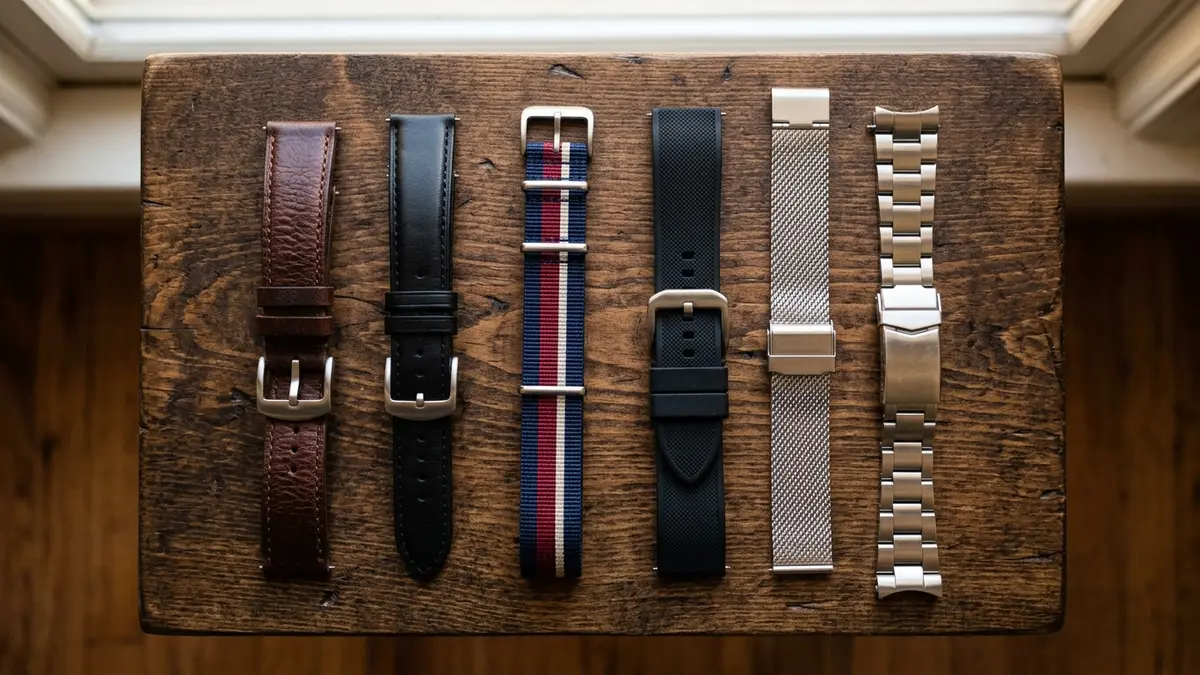
It doesn't need to be an exact match — the same family and similar depth of colour is enough. Metal bracelets, rubber and fabric straps are neutral and free you from this rule. More in the strap guide.
Rule 3: Match formality
A watch should sit at the same level of formality as your clothes:
- Black tie / formal → thin dress watch on black leather.
- Business → dress watch, slim sports watch on bracelet, or a classic three-hander.
- Smart casual → almost anything with good proportions — divers, field watches, integrated sports watches.
- Casual and sport → divers, G-Shocks, field watches, smartwatches, NATO straps.
Full breakdown: watches and dress codes.
Rule 4: Respect proportion — watch and cuff
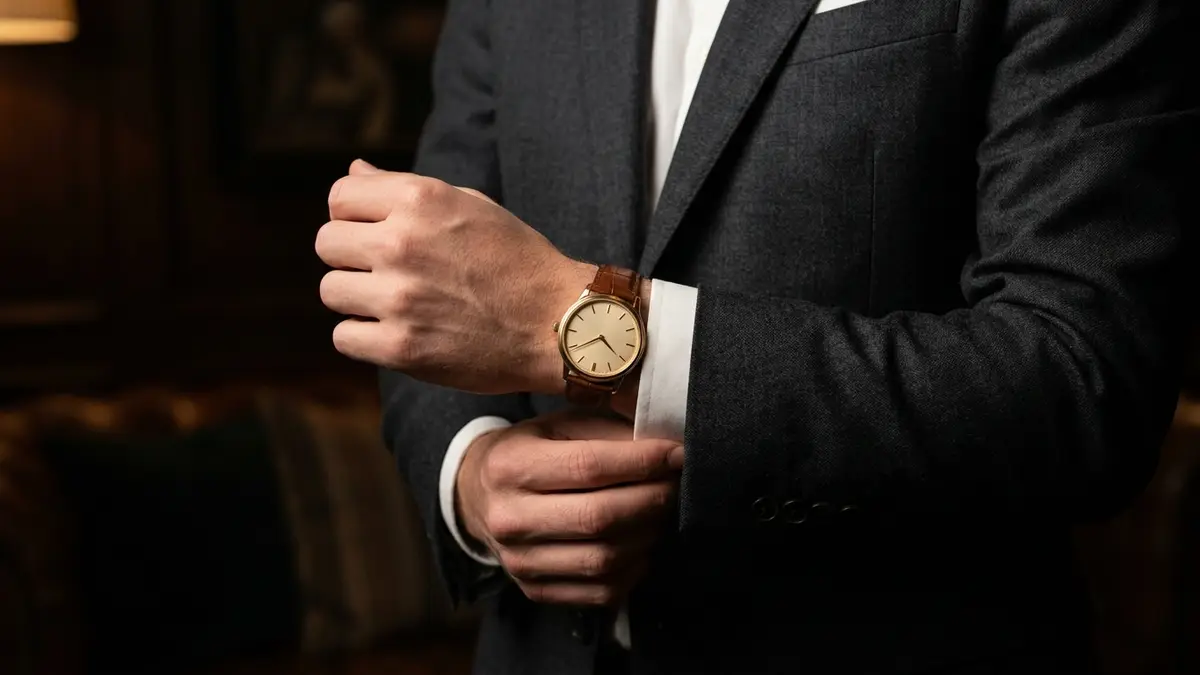
- With a suit or dress shirt, the watch should slide under the cuff. Thin cases (under ~11 mm) make this easy.
- Your shirt cuff should show about 1–1.5 cm below your jacket sleeve; the watch peeks out when you move your arm, not constantly.
- If you wear a watch daily with shirts, consider having your shirts made with a slightly wider left cuff.
- The watch should never overhang your wrist. See the watch size guide.
Rule 5: Which wrist?
Convention is to wear a watch on your non-dominant wrist — the left for right-handers. It protects the watch from knocks, keeps your writing hand free and makes crown operation easier. Left-handers often wear it on the right, and "destro" watches with the crown on the left exist for them. Ultimately, wear it where it's comfortable.
Position: just above the wrist bone (ulna), not on it — so the watch sits flat and doesn't slide over your hand.
Rule 6: Fit the strap properly
- You should be able to slide one finger between strap and wrist.
- Bracelets should be loose enough to rotate slightly but not slide over your wrist bone.
- Wrists swell in heat and during exercise — use a clasp with micro-adjustment.
Rule 7: Colour coordination
- Neutral dials (black, white, silver, blue) go with everything.
- Coloured dials (green, burgundy, salmon) look best when echoed subtly elsewhere — a tie, pocket square or knitwear.
- Blue dials are the most versatile colour after black and white; they pair beautifully with navy suits and denim.
When to break the rules
Style rules are a starting point. A steel diver with a navy suit (the "Bond" look), a gold watch with jeans, or a G-Shock with a tuxedo can all look intentional and confident. The key is to break rules consciously — and to keep the watch clean, well fitted and proportionate.
FAQ
Can I wear a silver watch with a gold wedding ring?
Yes. Wedding rings are the accepted exception to metal matching. If you want harmony, a two-tone watch bridges both metals.
Should my watch strap match my shoes?
For leather straps in business and formal settings, yes — same colour family and similar tone. For casual wear, and for bracelets, rubber or fabric, it matters much less.