The material of a watch case affects its weight, durability, look, comfort and price. The crystal material affects how well it resists scratches and shattering. Here's what you need to know about every common option.
Case materials
Stainless steel
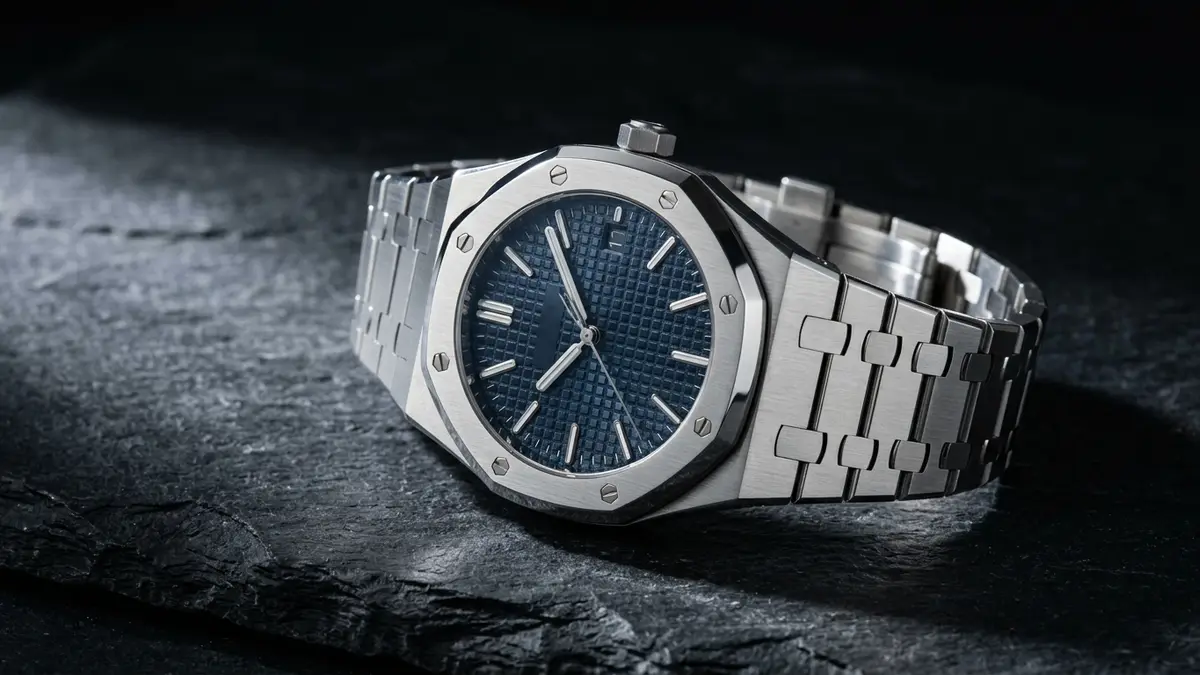
The default for good reason: tough, corrosion-resistant, easy to polish and brush, affordable and hypoallergenic for most people. Most watches use 316L surgical-grade steel. Rolex uses 904L (branded Oystersteel), which has higher chromium and molybdenum content for extra corrosion resistance and takes a brilliant polish. Some brands offer hardened steels like Sinn's Tegiment or Damasko's ice-hardened steel for scratch resistance.
Titanium
Around 40% lighter than steel, stronger for its weight, fully hypoallergenic and warm to the touch. Grade 2 titanium is matte grey; Grade 5 (an alloy with aluminium and vanadium) can be polished to a finish close to steel. Grand Seiko's "High-Intensity Titanium" is even harder. Downsides: plain titanium scratches easily (though scratches blend in) and it's harder to machine, so costs more.
Ceramic
Zirconium-oxide ceramic is nearly scratch-proof, light, and never fades. It's used for entire cases and especially for bezel inserts (Rolex "Cerachrom", Omega). The trade-off: a hard knock can crack or shatter it, and repairs mean replacing the part.
Bronze
Inspired by ships' fittings, bronze develops a unique patina over time — every bronze watch ages differently. Many enthusiasts love this; others don't. Casebacks are usually steel or titanium to avoid skin reactions. Popular from Tudor, Oris and many microbrands.
Gold
Solid gold (18k = 75% gold) comes in yellow, white, rose/red (with copper) and proprietary alloys such as Rolex Everose or Omega Sedna designed not to fade. It's heavy, soft (scratches easily) and expensive, but the classic luxury metal. Beware of "gold-tone", "gold-plated" or "PVD gold" — only a thin coating.
Other materials
- Platinum — heavier and rarer than gold, discreet white colour, very expensive.
- Carbon composites (forged carbon, Carbon TPT) — ultra light with unique marbled patterns.
- Resin — used by G-Shock and budget sports watches; light, tough, inexpensive.
- Bioceramic — Swatch's ceramic and castor-oil plastic blend, used in the MoonSwatch.
- Sapphire cases — fully transparent cases, extremely costly to machine.
Case materials compared
| Material | Weight | Scratch resistance | Hypoallergenic | Cost |
|---|---|---|---|---|
| 316L steel | Medium | Medium | Mostly | $ |
| 904L steel | Medium | Medium | Mostly | $$ |
| Titanium (Gr. 2/5) | Light | Low–medium | Yes | $$ |
| Ceramic | Light | Very high | Yes | $$$ |
| Bronze | Medium–heavy | Medium (patinates) | Not on skin | $$ |
| 18k gold | Heavy | Low | Yes | $$$$ |
| Carbon composite | Very light | High | Yes | $$$ |
| Resin | Very light | Low | Yes | $ |
Crystal materials
Sapphire
Synthetic sapphire (aluminium oxide) is 9 on the Mohs hardness scale — only diamond is harder — so it's almost impossible to scratch in daily life. It's standard from about $300 upwards. It can reflect glare, so quality watches add anti-reflective coating on the inside, outside or both. External AR coatings can show fine scratches in the coating itself over time.
Quick test: put a drop of water on the crystal. On sapphire it beads up tightly; on mineral glass it spreads out.
Mineral glass
Hardened glass (around 5–6 Mohs) used on budget watches. Seiko's Hardlex is a toughened mineral crystal that resists shattering better than sapphire, though it scratches more easily.
Acrylic (Hesalite, Plexiglas)
Plastic crystals scratch easily, but minor scratches polish out with a bit of polishing paste in seconds. They're shatterproof — the reason the Omega Speedmaster flew to the moon with a Hesalite crystal — and give a warm, vintage distortion at the edges.
Which material should you choose?
- One watch for everything: steel with a sapphire crystal.
- Sensitive skin or want lightness: titanium.
- Hate scratches: ceramic or hardened steel.
- Want character that evolves: bronze.
- Formal luxury: gold or platinum.
Materials also influence style — see matching metals with your outfit.
FAQ
Is 904L steel better than 316L?
904L has better corrosion resistance and takes a brighter polish, but it's harder to machine. For everyday wear, both are excellent; the difference is minor.
Can a sapphire crystal break?
Yes. Sapphire resists scratches superbly but can chip or crack from a sharp impact on a hard edge. Mineral and acrylic crystals are more shatter-resistant.