If there's a single watch style that combines honesty, durability and effortless good looks, it's the field watch. Born on the battlefield and refined for a century, it's a watch stripped down to what matters: tell the time clearly, survive anything, and never get in the way.
History
During World War I, soldiers discovered that pocket watches were impractical in the trenches. Wristwatches — "trench watches" — with wire lugs and luminous dials became standard issue. In World War II, the US Army's A-11 specification produced millions of simple, black-dialled, hacking watches from Elgin, Bulova and Waltham. Britain's Ministry of Defence commissioned the famous "Dirty Dozen" — twelve brands including Omega, IWC and Longines — to build waterproof W.W.W. watches.
After the war, Hamilton supplied field watches to the US military for decades, and today's Hamilton Khaki Field is the direct descendant. The style's rugged utility made it a civilian favourite.
Characteristic features
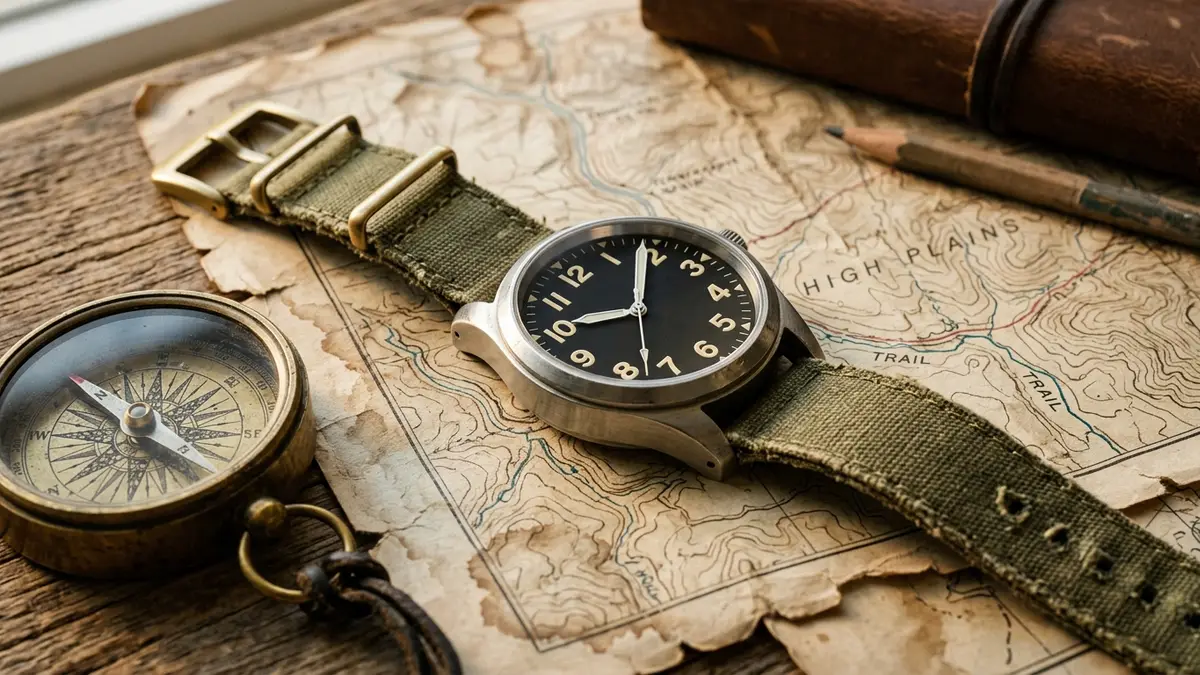
- High legibility — large Arabic numerals, often with an inner 13–24 hour track for military time.
- Matte dial — usually black, but also khaki, olive and cream — to avoid reflections.
- Luminous hands and numerals.
- Simple three-hand layout, rarely even a date.
- Modest size — historically 32–38 mm; modern versions 36–42 mm.
- Durable strap — canvas, NATO or rugged leather.
- Fixed smooth bezel and a practical crown.
Who field watches suit
People who dress casually or smart-casually, spend time outdoors, love vintage and military styling, or want an understated everyday watch that doesn't shout. It's one of the best-value styles too: excellent field watches start well under $100. With jeans, chinos, flannel and boots it's perfect; it can even work with a casual blazer. See outfit ideas.
Iconic field watches
- Hamilton Khaki Field Mechanical — the modern benchmark.
- Rolex Explorer — technically an "explorer's watch", the luxury field icon, worn on early Everest expeditions.
- Seiko 5 / Alpinist — Japanese field classics.
- Sinn 556 — German minimalist tool watch.
- Timex Expedition / Weekender — affordable everyday field watches.
- Marathon General Purpose Field — actual military issue.
- IWC Mark series — pilot-field crossovers.
Best field watches by budget
| Watch | Approx. price | Why |
|---|---|---|
| Timex Weekender / Expedition | ~$50–$80 | Legible, light, Indiglo backlight |
| Casio MW-240 / field-style quartz | ~$30 | Budget beater |
| Citizen Eco-Drive Garrison | ~$200 | Solar — no battery changes |
| Seiko 5 Sports Field | ~$275 | Automatic, 100 m |
| Hamilton Khaki Field Mechanical | ~$575 | 80-hour hand-wound, sapphire |
| Seiko Prospex Alpinist | ~$750 | 200 m, 70-hour reserve, compass bezel |
| Sinn 556 I | ~$1,600 | German engineering, 200 m |
| Rolex Explorer 40 | ~$7,500+ | The luxury field watch |
Style tips
- Swap a canvas strap for brown suede to take a field watch from weekend to office.
- An olive or khaki dial pairs brilliantly with denim and earth tones.
- Keep it 36–40 mm — oversized field watches lose the charm.
FAQ
What's the difference between a field watch and a pilot watch?
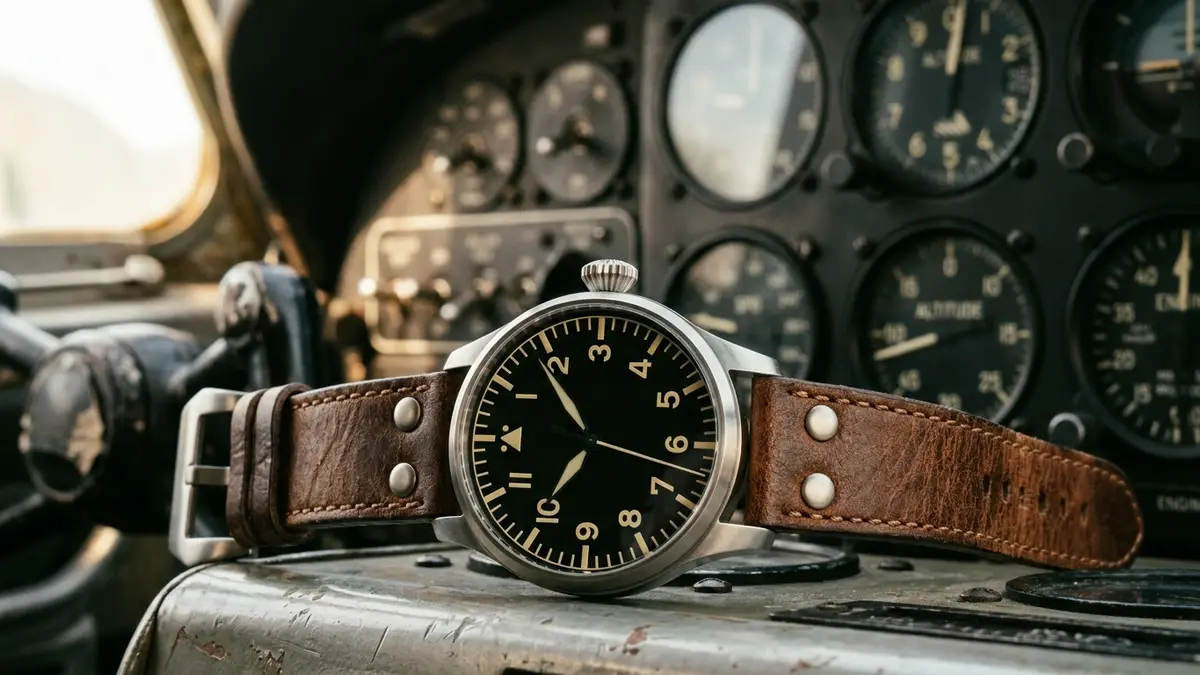
Both are military tool watches. Pilot watches tend to be larger with oversized crowns and a triangle marker at 12, designed for cockpit legibility; field watches are smaller and simpler, designed for soldiers on the ground.
Is a field watch waterproof?
Most offer 50–100 m water resistance, fine for rain and often for swimming. Check your model's rating before swimming.