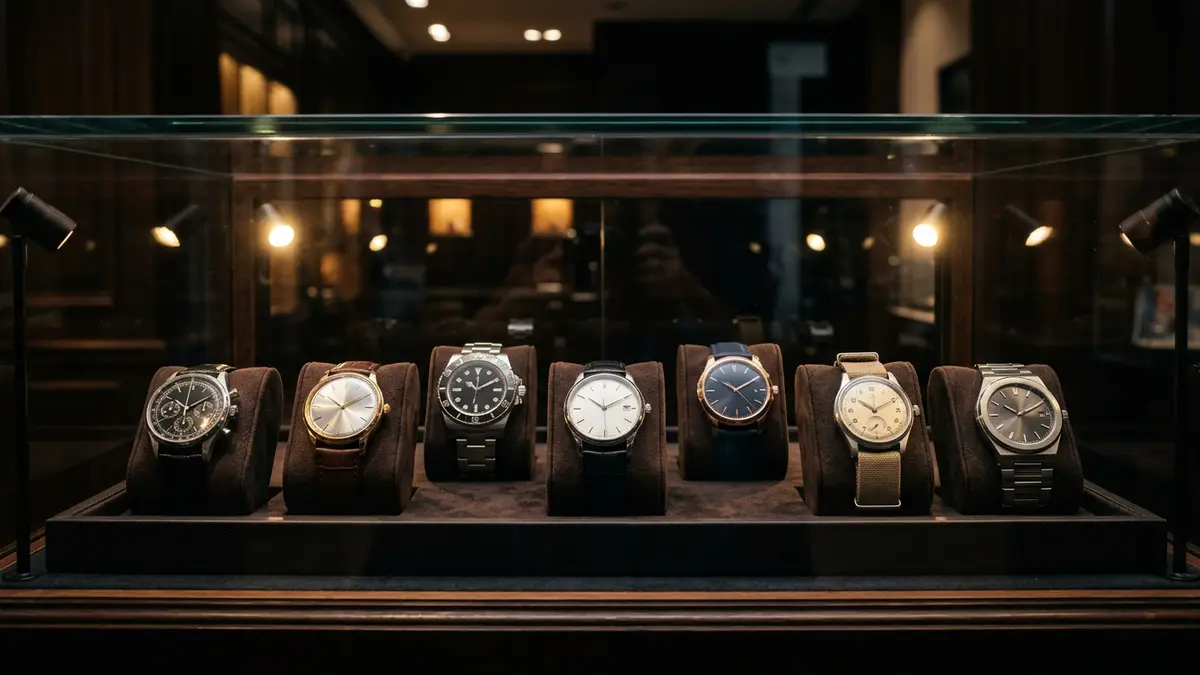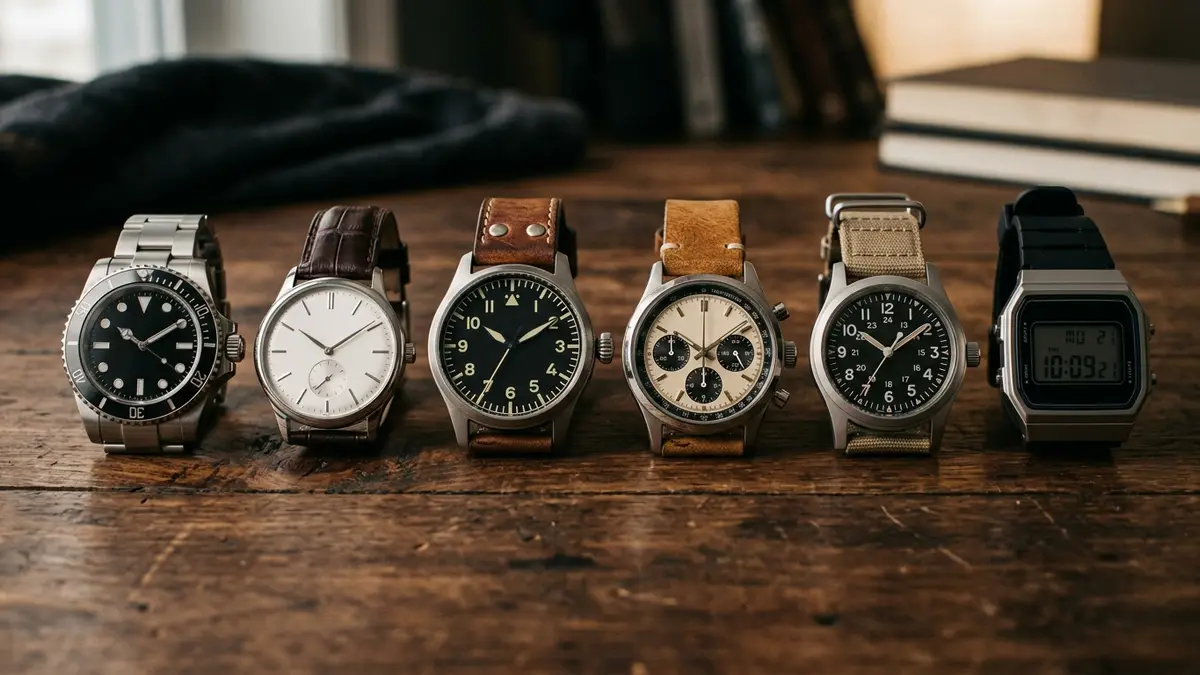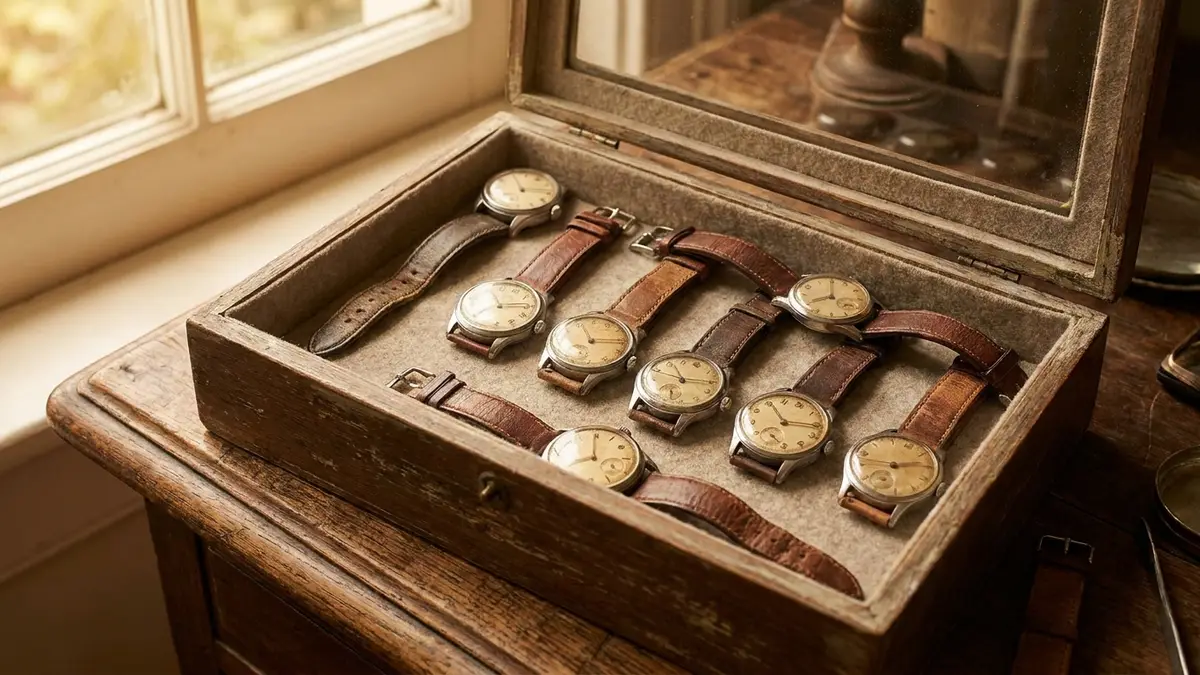
Beyond the boutique, a huge secondary market offers pre-owned and vintage watches — sometimes at a discount, sometimes at a premium, and often with stories no new watch can match. Each route has advantages and risks.
Definitions
- New — unworn, bought from an authorised dealer or the brand with full factory warranty.
- Grey market new — unworn, sold by an unauthorised dealer, often discounted; warranty may be dealer-backed rather than factory.
- Pre-owned — previously owned, typically modern (made within the last 20–30 years).
- Vintage — generally 30+ years old; "neo-vintage" covers roughly the 1990s–2000s.
New watches
Pros
- Full manufacturer warranty (often 2–5 years)
- Perfect condition, latest technology
- No authenticity worries
- The joy of being the first owner
Cons
- Full retail price
- Most brands depreciate immediately (often 20–40%)
- Some popular models have long waiting lists
Pre-owned watches
Pros
- Often 20–40% below retail for many brands
- Access to discontinued references
- Immediate availability
- Less depreciation when you sell
Cons
- Authenticity and condition risks
- May need a service soon
- Shorter or no warranty
- Hot models may sell above retail
Vintage watches
Pros
- History, character and patina
- Smaller, classic sizes
- Unique — no one else has quite the same watch
- Some references appreciate in value
Cons
- Lower water resistance — treat as not waterproof
- Parts can be scarce and servicing expensive
- Higher risk of fakes, redials and replaced parts
- Less accurate and robust than modern watches
What to check before buying pre-owned or vintage
- Seller reputation — reviews, returns, authenticity guarantee. See how to spot a fake.
- Originality — dial, hands, bezel, crown and bracelet should be correct for the reference.
- Service history — when was it last serviced and by whom?
- Timekeeping — ask for a timegrapher reading (rate, amplitude, beat error).
- Case condition — heavy polishing softens edges and reduces value; collectors prefer unpolished cases.
- Box and papers — add value (often 10–20% on luxury watches).
- Return period — so a watchmaker can inspect it.
Vintage condition terms
| Term | Meaning |
|---|---|
| Patina | Natural ageing of lume, dial or metal — often desirable |
| Tropical dial | Black dial faded to brown by UV — can be very valuable |
| Redial | Dial repainted — reduces collector value significantly |
| Service dial / hands | Replaced by the brand during service — genuine but less desirable |
| Overpolished | Case edges rounded by excessive polishing |
| NOS | New old stock — never sold or worn |
| Honest / all-original | Untouched condition with authentic wear |
Budget for servicing
Unless recently serviced, budget $200–$800 for a pre-owned mechanical watch and potentially more for vintage pieces needing parts. See the servicing guide.
Which should you buy?
- First watch, want peace of mind: new.
- Want more watch for your money: pre-owned from a reputable dealer.
- Love history and character: vintage, ideally with expert help.
- Thinking about value: read watches as an investment.
FAQ
Is it safe to buy a used watch online?
It can be, if you buy from a reputable dealer with an authenticity guarantee and return period, or use escrow with independent authentication. Avoid private sellers without verification.
Can I swim with a vintage watch?
It's best not to. Gaskets age and old cases may not be sealed to original specifications. Only swim with a vintage watch after a service and pressure test, and even then with caution.