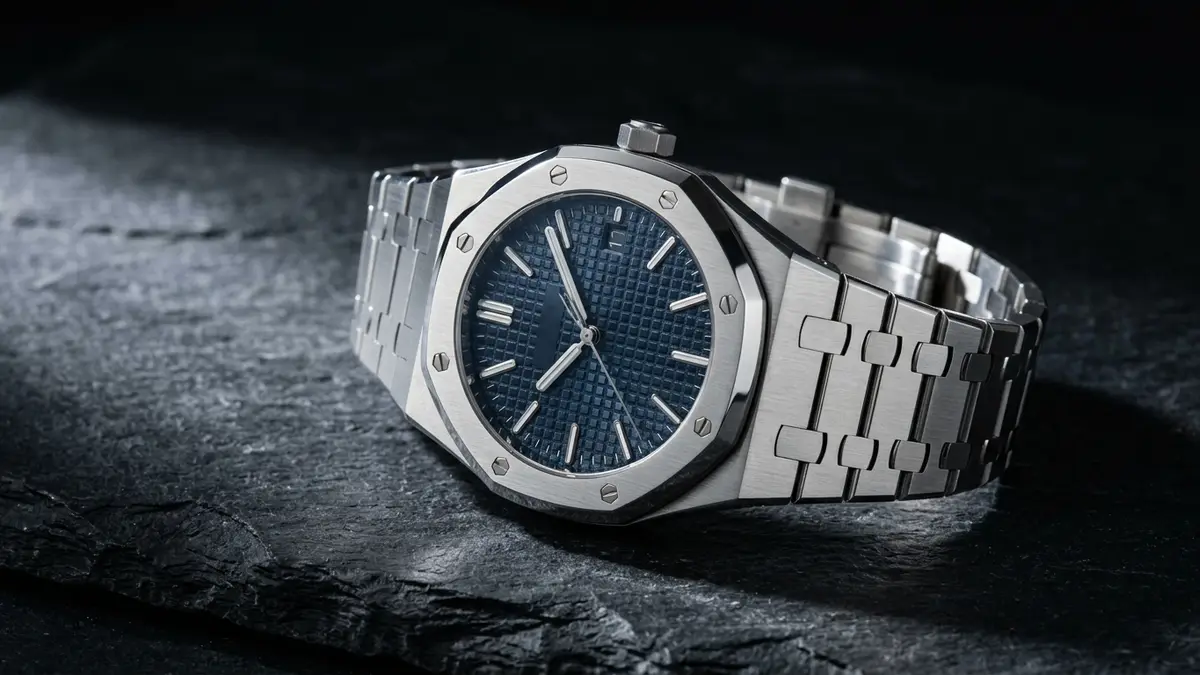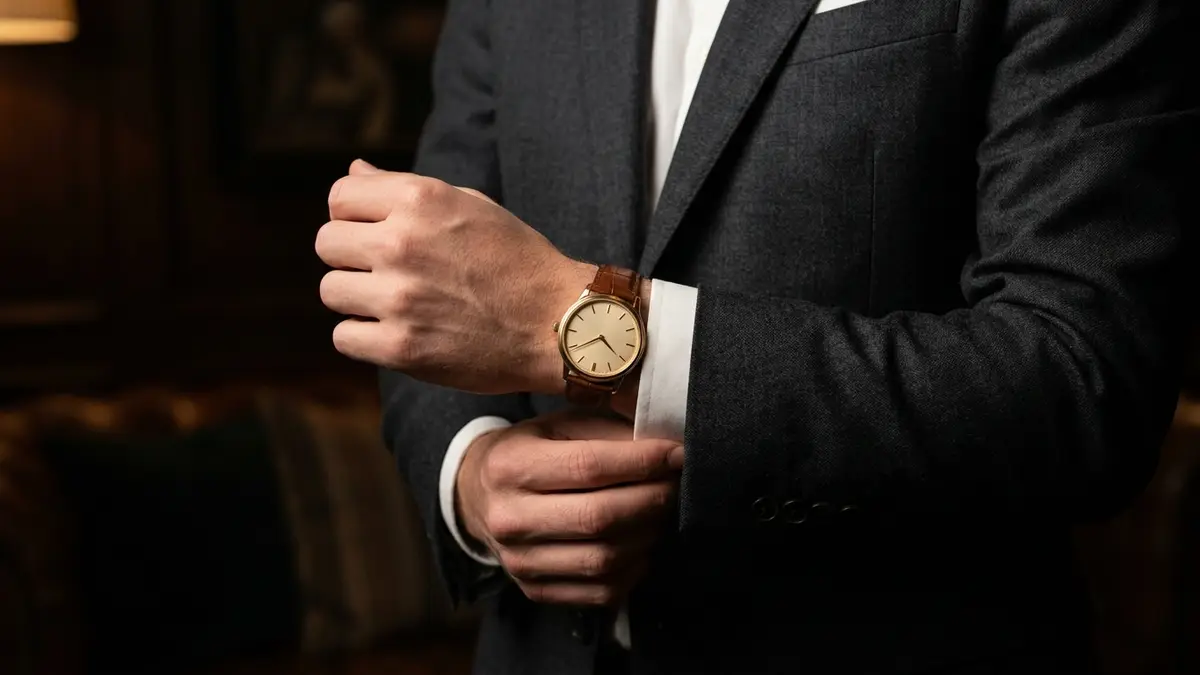
A watch that fits well looks intentional and feels comfortable all day. One that's too big or too thick looks borrowed and catches on everything. Size isn't only about diameter — lug-to-lug, thickness, case shape and dial design all matter. Here's how to get it right.
Enter your wrist measurement in our watch size calculator for instant, personalised recommendations and a list of watches that fit.
Step 1: Measure your wrist
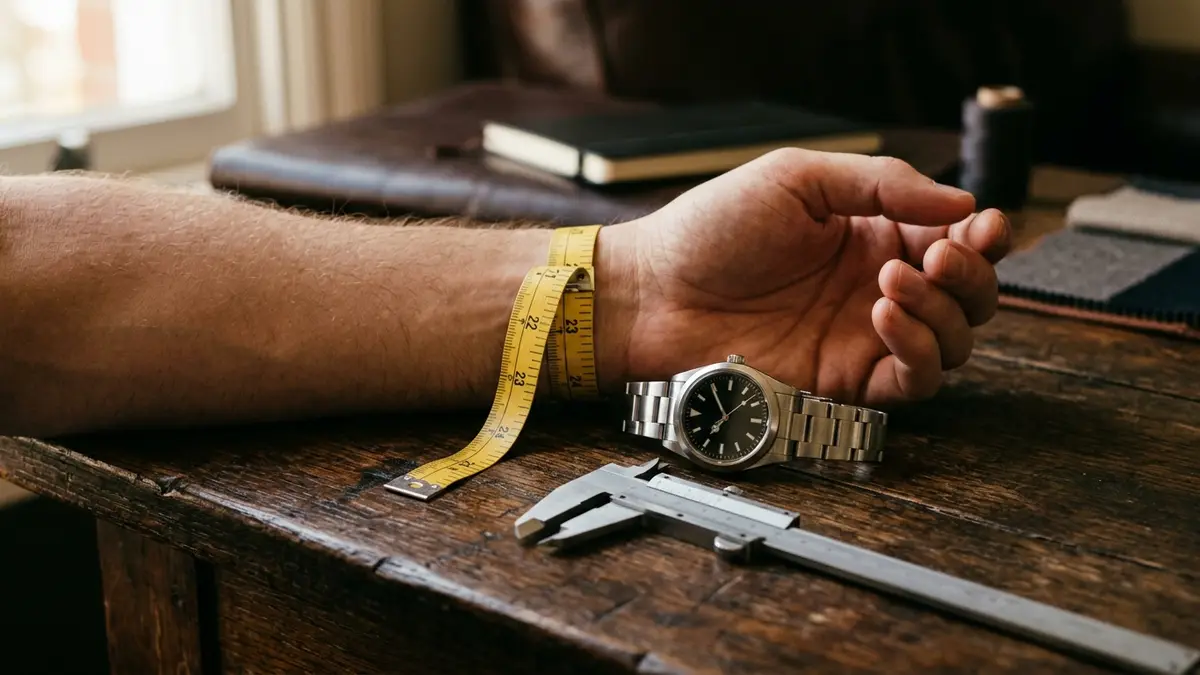
- Wrap a soft tape measure (or a strip of paper) around your wrist just above the wrist bone, where you'd wear a watch.
- Keep it snug but not tight.
- Note the measurement in centimetres or inches. If using paper, mark it and measure against a ruler.
Also note your wrist's shape: flat and wide wrists can wear bigger watches than round ones of the same circumference. The width across the top of your wrist is the real limit for lug-to-lug.
Step 2: Understand the key measurements
- Case diameter — width across the case, excluding the crown. The headline number.
- Lug-to-lug (L2L) — top lug tip to bottom lug tip. This is the most important for fit. The lugs should never extend past the edges of your wrist.
- Thickness — caseback to crystal. Affects cuff clearance, weight and top-heaviness.
- Lug width — affects visual balance; a wider strap makes the watch look bigger.
Step 3: Use the size chart
| Wrist circumference | Dress watch | Everyday / sports | Max lug-to-lug |
|---|---|---|---|
| 14–15 cm (5.5–5.9 in) | 33–36 mm | 34–38 mm | ~44 mm |
| 15–16 cm (5.9–6.3 in) | 34–37 mm | 36–39 mm | ~47 mm |
| 16–17 cm (6.3–6.7 in) | 36–38 mm | 38–40 mm | ~50 mm |
| 17–18 cm (6.7–7.1 in) | 37–39 mm | 39–42 mm | ~52 mm |
| 18–19 cm (7.1–7.5 in) | 38–40 mm | 41–43 mm | ~55 mm |
| 19–20 cm (7.5–7.9 in) | 39–41 mm | 42–45 mm | ~58 mm |
| Over 20 cm (7.9 in+) | 40–42 mm | 43–47 mm | ~60 mm |
These are starting points — personal taste matters. Vintage-sized watches (34–38 mm) have become fashionable again, and many people with average wrists now prefer 38–40 mm.
Thickness guidelines
| Thickness | How it wears | Typical watches |
|---|---|---|
| Under 8 mm | Ultra-thin, vanishes under a cuff | Dress watches, hand-wound |
| 8–11 mm | Slim, comfortable, versatile | Field, integrated sports, slim divers |
| 11–13 mm | Average for automatic sports watches | Most divers, GMTs |
| 13–15 mm | Chunky; may catch on cuffs | Chronographs, professional divers, G-Shock |
| Over 15 mm | Very tall, top-heavy | Extreme divers, smartwatches |
What makes a watch wear bigger or smaller
- Bezel width — a wide dive bezel makes the dial smaller, so the watch wears smaller than a dress watch of the same diameter.
- Dial colour — white and light dials look larger than black ones.
- Lug shape — short, curved lugs hug the wrist; long, straight lugs extend it.
- Case shape — cushion and square cases wear bigger than round ones of the same width. A 40 mm square watch feels like a 42–43 mm round one.
- Bracelet vs strap — bracelets add visual weight.
- Crown size — big crowns (pilot watches) add width and can dig into your hand.
Advice for small wrists
- Look at 34–39 mm watches and prioritise short lug-to-lug (under 46 mm).
- Choose thin cases and tapered straps.
- Vintage and dress watches offer plenty of choice.
- Avoid wide bezels paired with long lugs.
Advice for large wrists
- You can wear 42–46 mm comfortably, but don't feel obliged — a 40 mm watch looks elegant on anyone.
- Wider straps (22–24 mm) balance a large wrist.
- Cushion-cased divers and pilot watches look natural.
Try before you buy
Photos can be deceiving. If you can't try a watch on in a shop, print a paper template at 100% scale using the watch's diameter and lug-to-lug, and place it on your wrist. Or compare with a watch you already own using our comparison tool.
FAQ
Is 40 mm a good watch size?
Yes — 40 mm is the most popular size for men's sports watches and suits wrists from roughly 16 to 19 cm. Check lug-to-lug and thickness too.
Is a 42 mm watch too big?
For wrists under about 17 cm it can be, especially with long lugs. For average and larger wrists it's a comfortable sports size.
What is more important: diameter or lug-to-lug?
Lug-to-lug. If the lugs extend past the edges of your wrist, the watch will look and feel too big regardless of diameter.