Germany is the second great European watchmaking nation, with a style all its own: precise engineering, restrained design and a distinctive approach to movement finishing. Its heart is the small Saxon town of Glashütte, while the Black Forest and Pforzheim host other important makers.
A short history of German watchmaking
In 1845, Ferdinand Adolph Lange founded a watchmaking workshop in Glashütte, transforming an impoverished mining town into a centre of precision horology. By the early 20th century, Glashütte produced some of the finest pocket watches in the world. After WWII, the town fell within East Germany and its manufacturers were nationalised into a single state enterprise (GUB). After reunification in 1990, the industry was reborn: Walter Lange re-founded A. Lange & Söhne, and GUB became Glashütte Original. Today, "Glashütte" on a dial is legally protected and requires that at least 50% of the movement's value be created in the town.
Characteristic German features
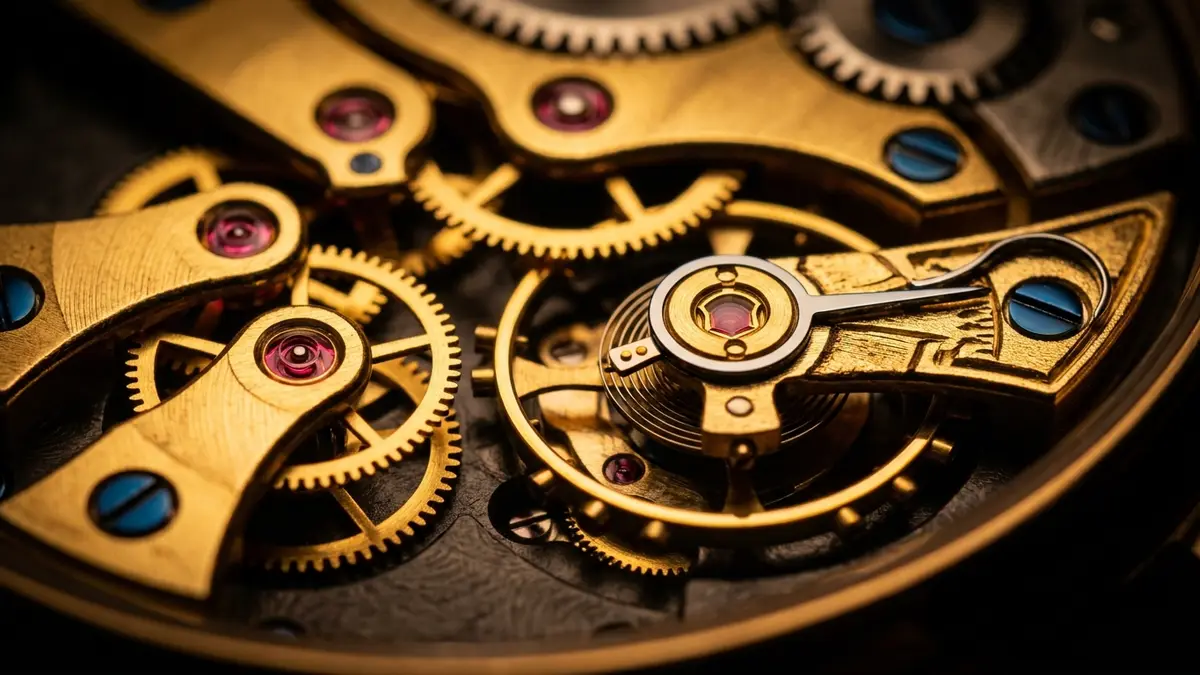
- Three-quarter plate — a large plate covering most of the movement, for stability.
- Glashütte ribbing (stripes) and sunburst finishing.
- Hand-engraved balance cocks on high-end pieces.
- Gold chatons held by blued screws.
- Untreated German silver (maillechort) plates that develop a warm patina.
- Bauhaus design — clean, functional dials exemplified by Junghans and Nomos.
- Tool-watch engineering — hardened steels, anti-fogging, magnetic shields from Sinn and Damasko.
The brands
A. Lange & Söhne
Owned by Richemont, Lange is widely considered on par with Patek Philippe. Every movement is assembled twice and hand-finished. Icons include the Lange 1 with its off-centre dial and outsize date, the Saxonia, the 1815 and the Zeitwerk digital-display mechanical watch. Prices typically start around $20,000+.
Glashütte Original
Part of Swatch Group, producing in-house movements with classic Glashütte finishing. The Senator collection, PanoMatic asymmetric dials and SeaQ divers offer high-end craft for less than Lange.
Nomos Glashütte
Founded in 1990, Nomos makes almost all of its movements in-house — remarkable for its price bracket. Its Bauhaus-inspired Tangente, Orion, Club and Ahoi are thin, beautifully proportioned and cost roughly $1,800–$5,000. Arguably the best-value in-house mechanical watches anywhere.
Junghans
Founded in 1861 in Schramberg (Black Forest), once the world's largest watch factory. Famous for the max bill collection designed by Bauhaus artist Max Bill, and for pioneering radio-controlled watches in Germany.
Sinn
Frankfurt-based tool-watch specialist founded by pilot Helmut Sinn in 1961. Known for technical innovations: Tegiment hardened steel, Ar-dehumidifying technology and submarine-steel U-series divers. The 556, 104 and U1 are enthusiast favourites.
Stowa and Laco
Both were among the five original makers of the WWII Flieger B-Uhr. Today they make authentic pilot watches at honest prices. See pilot watches.
Others
Damasko (hardened steel, in-house parts), Mühle-Glashütte (nautical instruments and tool watches), Tutima (military chronographs), Moritz Grossmann and Hanhart.
German brands at a glance
| Brand | Speciality | Typical price |
|---|---|---|
| Laco | Authentic Flieger watches | $400–$2,000 |
| Junghans | Bauhaus design, radio-controlled | $500–$2,000 |
| Stowa | Flieger, Bauhaus, value | $700–$2,000 |
| Sinn | Technical tool watches | $1,300–$5,000 |
| Nomos | In-house Bauhaus design | $1,800–$5,000 |
| Glashütte Original | Traditional Saxon luxury | $7,000–$50,000 |
| A. Lange & Söhne | Haute horlogerie | $20,000+ |
FAQ
Is A. Lange & Söhne better than Patek Philippe?
They're peers. Lange is often praised for its movement finishing and German design; Patek for its history, complications and brand prestige. Both are at the very top of watchmaking.
What is the best German watch for the money?
Nomos is exceptional value for an in-house movement; Stowa, Laco and Sinn offer superb tool watches at fair prices.