The hand-wound watch is the purest form of mechanical watchmaking. There is no rotor and no battery — just a mainspring that you wind by turning the crown, and a movement that releases that energy with extraordinary precision for the next day or two. It is the oldest wristwatch technology still in production, and many enthusiasts consider it the most satisfying to own.
How a manual-wind movement works
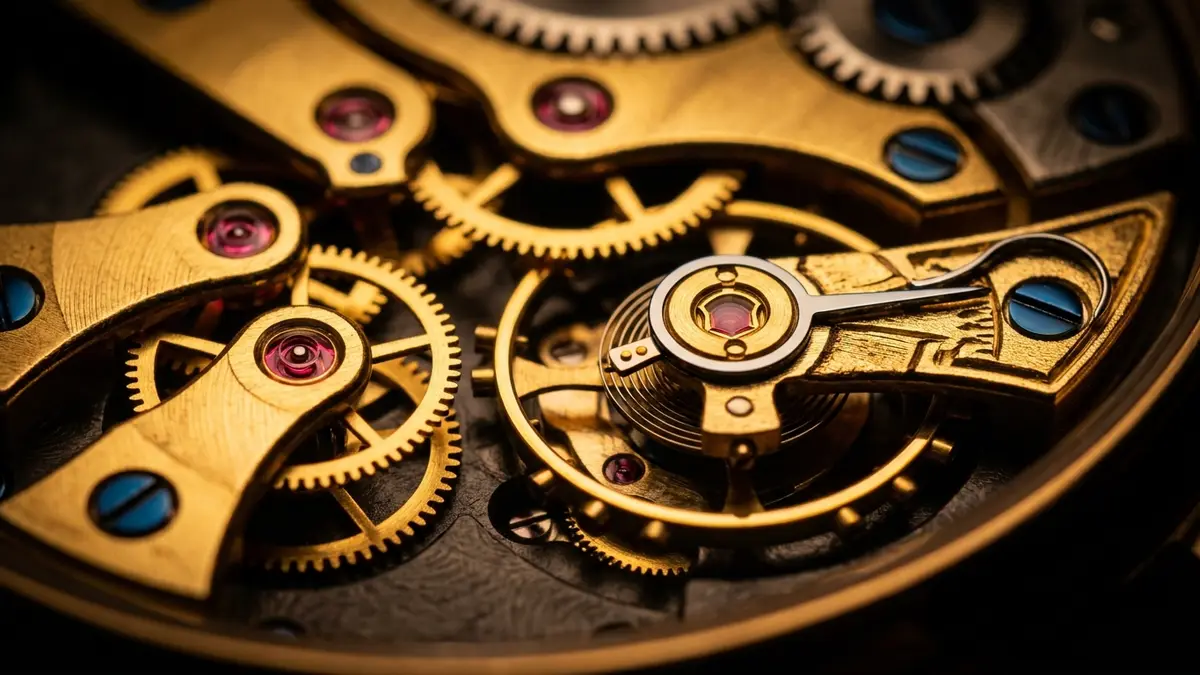
Turning the crown tightens the mainspring, a long ribbon of alloy coiled inside a small drum called the barrel. As the spring unwinds, it turns the gear train, which drives the hands. The escapement and balance wheel let that energy out in precise, equal steps — typically 6 or 8 beats per second — producing the familiar tick and keeping time.
When the spring runs down, the watch stops. The total running time on a full wind is the power reserve: classic movements offer about 40 hours, while modern designs like Hamilton's H-50 run for 80 hours and some high-end calibers for a week or more.
Advantages of manual winding
- Thinness — with no rotor, movements can be dramatically slimmer. Most of the world's thinnest dress watches are hand-wound.
- The view — through an exhibition caseback you see the entire movement uninterrupted, not hidden behind a rotor.
- The ritual — a daily 30-second wind creates a connection with the watch that many owners love.
- Simplicity — fewer parts than an automatic, which can mean easier servicing.
- Heritage — famous icons like the Omega Speedmaster Moonwatch are hand-wound.
Disadvantages
- You must remember to wind it — ideally every morning.
- If you rotate several watches, you will reset it often.
- Constantly unscrewing a screw-down crown to wind causes wear on the threads over years.
How to wind a manual watch correctly
- Take the watch off your wrist to avoid side pressure on the crown stem.
- If the crown screws down, unscrew it until it pops out to the winding position.
- Turn the crown clockwise (away from you) in smooth, gentle strokes. 20–40 turns fully wind most movements from empty.
- Stop as soon as you feel resistance. Never force it — modern movements prevent overwinding damage, but forcing the crown can harm the stem.
- Wind at the same time every day, ideally in the morning, so the watch runs on the strongest part of the spring's power while you wear it.
Full instructions, including date setting: how to wind and set a watch.
Notable hand-wound watches
| Watch | Approx. price | Why it matters |
|---|---|---|
| Timex Marlin Hand-Wound | ~$250 | Affordable vintage-style dress watch |
| Seagull 1963 Chronograph | ~$350 | Hand-wound chronograph at an incredible price |
| Hamilton Khaki Field Mechanical | ~$575 | Military classic with 80-hour reserve |
| Nomos Tangente | ~$2,100 | In-house Glashütte movement, Bauhaus design, 6.8 mm thin |
| Omega Speedmaster Professional | ~$7,100 | The Moonwatch — worn on every Apollo mission |
| A. Lange & Söhne 1815 | $25,000+ | Among the finest hand-finished movements made |
Is a hand-wound watch right for you?
Choose manual wind if you value thinness, love watching a movement at work, or enjoy daily rituals. If you'd rather never think about winding, an automatic or solar watch is a better fit.
FAQ
Can you overwind a manual watch?
Modern hand-wound watches have a stop that prevents winding beyond full. You will feel firm resistance. Stop there — forcing past it can damage the crown or stem.
How often should I wind my hand-wound watch?
Once a day, at the same time, is ideal — even if the power reserve is longer. It keeps timekeeping more consistent.