Look at any watch forum and you'll see heated debates about whether a watch has an "in-house" movement. For some buyers it is a deal-breaker; for others it is irrelevant. Understanding what the terms mean — and what they don't — will make you a much smarter buyer.
What "in-house" means
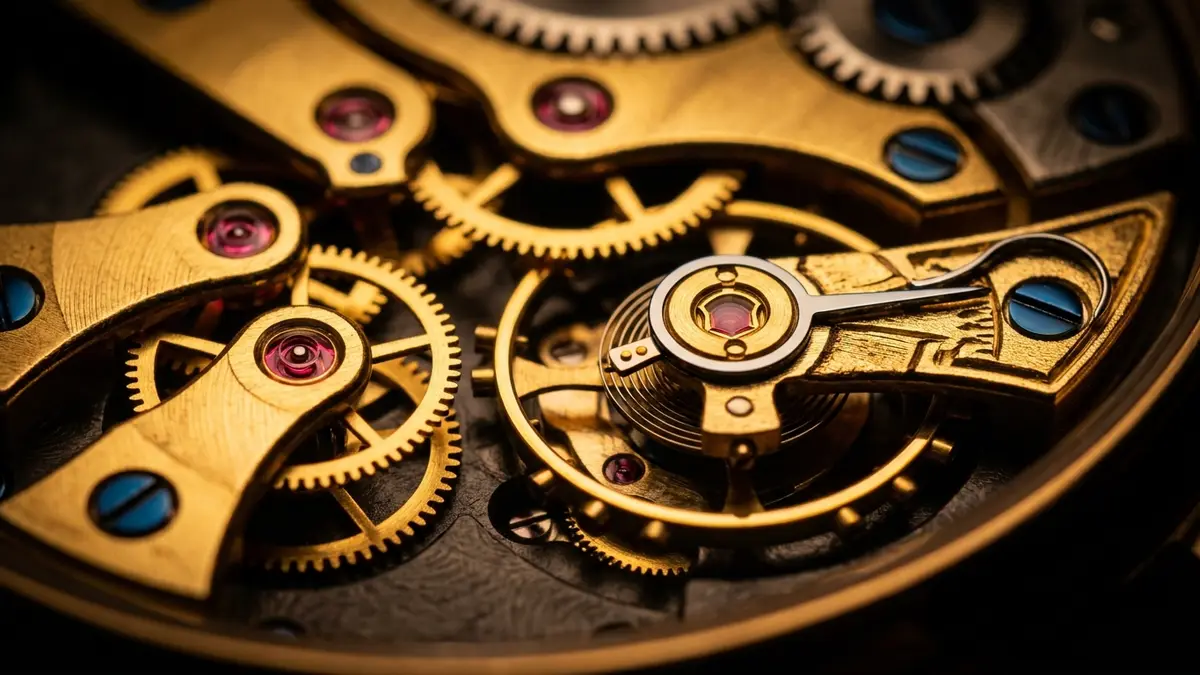
An in-house (or "manufacture") movement is designed and produced by the watch brand itself — or at least by its own group. Rolex, Grand Seiko, Patek Philippe, A. Lange & Söhne, Nomos and Seiko make their own. Brands that build in-house calibers invest heavily in research, tooling and specialist staff, and they can create distinctive features that no one else has.
But definitions are fuzzy. Some "in-house" movements use outsourced components such as hairsprings; others are developed with a sister company. Tudor's MT calibers, for instance, are produced by Kenissi, a movement maker co-owned with other brands. That's not deceptive — it's just how the industry works.
The workhorse base calibers
Most watches under about $3,000 use movements from specialist suppliers. These are proven, widely serviced and very reliable.
| Caliber | Maker | Type | Reserve | Typical watches |
|---|---|---|---|---|
| ETA 2824-2 | ETA (Swatch Group, Switzerland) | Automatic, 28,800 vph | ~38 h | Classic Swiss mid-range |
| Sellita SW200-1 | Sellita (Switzerland) | Automatic, 28,800 vph (2824 equivalent) | ~38–41 h | Oris, Sinn, Christopher Ward, many others |
| ETA/Valjoux 7750 & Sellita SW500 | ETA / Sellita | Automatic chronograph | ~42–62 h | Most Swiss automatic chronographs |
| Powermatic 80 / H-10 / C07 | ETA for Swatch Group brands | Automatic, 21,600 vph | ~80 h | Tissot, Hamilton, Mido, Certina |
| Seiko NH35 / NH36 | Seiko Instruments (TMI) | Automatic, hacking, hand-wind | ~41 h | Hundreds of microbrands |
| Miyota 8215 / 9039 / 9015 | Miyota (Citizen) | Automatic | ~40–42 h | Citizen, microbrands |
| Seagull ST2130 / ST19 | Tianjin Seagull (China) | Automatic / manual chronograph | ~40 h | Chinese brands, budget microbrands |
Why the ETA story matters
For decades, ETA supplied movements to almost the entire Swiss industry. In the 2000s, Swatch Group began restricting sales to outside brands. That pushed competitors to either develop in-house movements or turn to Sellita, which started producing its own versions of ETA designs after key patents expired. The result is today's landscape: Sellita powers much of the independent Swiss mid-market, while Swatch Group brands enjoy upgraded ETA-derived calibers like the 80-hour Powermatic 80.
In-house vs base caliber: the trade-offs
| Factor | In-house | Base caliber (ETA, Sellita, Miyota, Seiko) |
|---|---|---|
| Exclusivity & prestige | High | Low |
| Innovation (reserve, anti-magnetism) | Often better | Improving, but standard |
| Servicing | Usually brand-only, more expensive | Any competent watchmaker, cheaper |
| Parts availability long-term | Depends on the brand | Excellent |
| Proven reliability | Varies — new designs can have teething issues | Decades of track record |
| Effect on price | Adds hundreds to thousands | Keeps prices down |
| Resale value | Tends to be stronger | Tends to be weaker |
How to judge a movement, whoever made it
- Power reserve — 70–80 hours is a modern luxury.
- Accuracy spec — look for stated tolerances or chronometer certification.
- Grade — ETA and Sellita offer grades (Standard, Elaboré, Top, Chronometer/Premium) with better parts and adjustment.
- Anti-magnetic parts such as silicon hairsprings.
- Finishing — only relevant if you can see it through a display back.
- Service network — can you get it serviced where you live?
Our take
Don't pay a big premium for "in-house" alone. A beautifully made watch with a Sellita or Seiko movement is a better buy than a mediocre one with a proprietary movement. In-house movements start to matter at luxury prices, where you're paying for the full expression of a brand's craft. See how brands compare in our brand hierarchy.
FAQ
Is an ETA movement good?
Yes. ETA movements like the 2824-2 and 7750 are among the most proven designs in history, used for decades by respected brands and serviceable almost anywhere.
What is the Seiko NH35?
An inexpensive, robust automatic movement made by Seiko Instruments with hacking and hand-winding. It powers the majority of affordable microbrand watches.