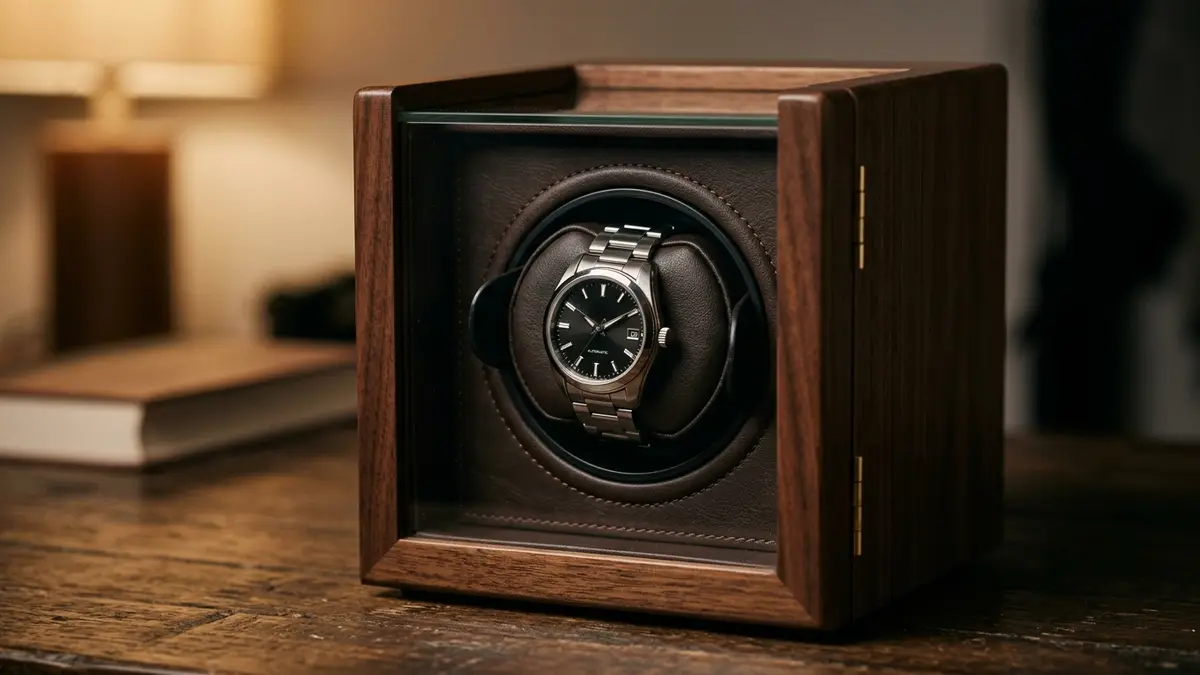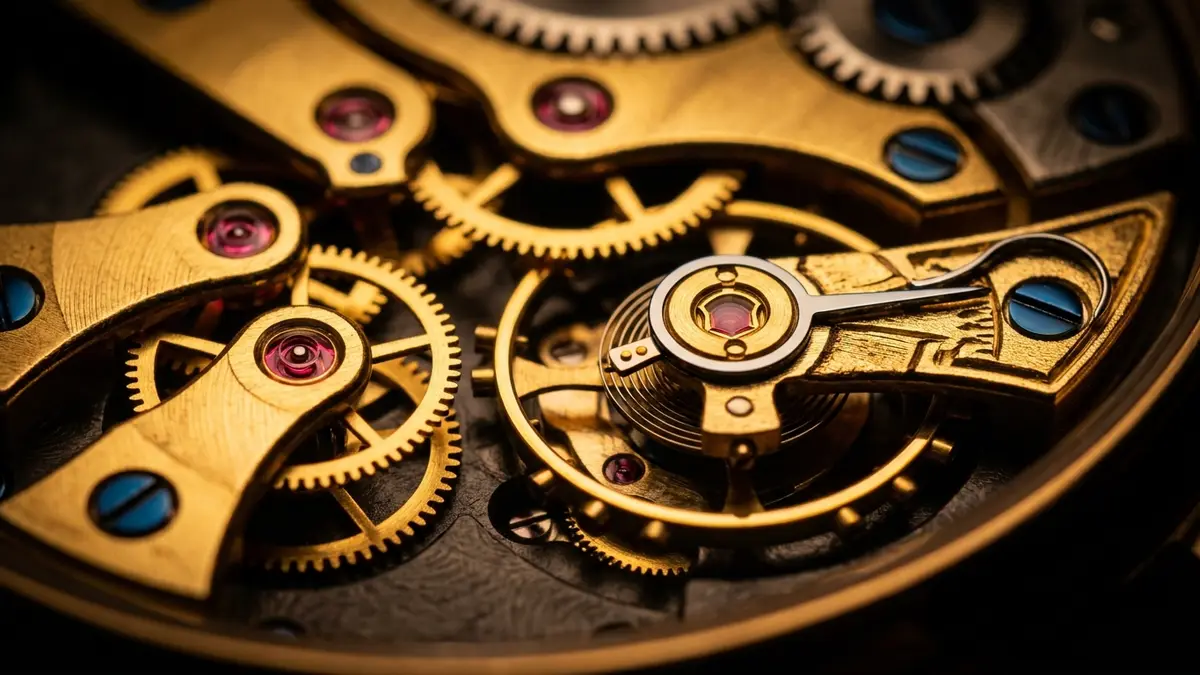
Every watch is driven by one of two fundamentally different technologies. A mechanical watch stores energy in a coiled spring and releases it through a chain of gears regulated by an oscillating balance wheel. A quartz watch uses a battery to make a tiny quartz crystal vibrate at exactly 32,768 times per second, and a circuit counts those vibrations to drive a stepping motor. Both tell the time; they do it in very different ways, with very different consequences for you as an owner.
A 60-second history
For centuries every watch was mechanical. Then, on Christmas Day 1969, Seiko launched the Astron — the world's first quartz wristwatch — and within 15 years cheap, ultra-accurate quartz had almost wiped out the traditional Swiss industry in what became known as the "Quartz Crisis". Hundreds of brands closed. The survivors reinvented mechanical watches as luxury objects valued for craftsmanship, heritage and emotion rather than pure precision. That is why, today, mechanical watches dominate the high end while quartz dominates everyday and budget watches.
Head-to-head comparison
| Factor | Mechanical | Quartz |
|---|---|---|
| Typical accuracy | ±5 to ±20 seconds per day | ±15 seconds per month (HAQ: ±10 s per year) |
| Power source | Mainspring (wound by hand or rotor) | Battery or solar-charged cell |
| Seconds hand | Smooth sweep (6–10 steps per second) | Ticks once per second |
| Maintenance | Full service every 5–10 years ($200–$800+) | Battery every 2–5 years ($10–$50); rarely a service |
| Stops if not worn? | Yes, after its power reserve (usually 38–80 h) | No, runs for years |
| Durability to shocks | Good, but hard knocks can affect timing | Generally very robust |
| Magnetism | Can be affected; needs demagnetising | Temporarily affected at most |
| Lifespan | Many decades — can be repaired indefinitely | Circuit may eventually fail; parts availability varies |
| Price for same quality | Higher | Lower |
| Emotional appeal | High — a living machine | Practical and precise |
Accuracy: quartz wins, clearly
There is no contest here. Even a $20 quartz watch is more accurate than a $50,000 mechanical one. A mechanical watch that gains 5 seconds a day is excellent by mechanical standards — yet that adds up to 2.5 minutes per month. A standard quartz watch will typically drift less than half a minute in the same period.
If you want accuracy with zero effort, consider radio-controlled watches, which sync to atomic time signals and are effectively perfect.
Cost of ownership
A mechanical watch needs a full service — disassembly, cleaning, lubrication, regulation and new gaskets — roughly every 5–10 years. Budget movements like the Seiko NH35 or Miyota 8215 are often cheaper to replace than to service. Swiss luxury services typically cost $400–$1,000, and complicated watches more. See our servicing guide for detailed costs.
Quartz needs a new battery every few years, and a pressure test afterwards if water resistance matters. Solar quartz like Citizen Eco-Drive may run a decade or more before its rechargeable cell needs replacing.
Tissot PRX quartz: ~$395 plus 3 battery changes (~$90) ≈ $485. Tissot PRX Powermatic 80: ~$725 plus one service (~$300) ≈ $1,025. The mechanical costs about twice as much to own — the question is whether its character is worth that to you.
The "soul" argument
Why do millions of people choose the less accurate, more expensive option? Because a mechanical watch is a self-contained machine with no electronics — hundreds of tiny parts, often hand-finished, working together on your wrist. Many owners love:
- The smooth sweep of the seconds hand.
- Watching the movement through an exhibition caseback.
- The ritual of winding and setting.
- The idea that, with servicing, the watch can outlive them and be passed down.
- Centuries of horological tradition.
Quartz defenders counter that a tool should simply work — and a quartz watch always does. Both views are valid.
Hybrid and alternative technologies
The line between the two is blurrier than it used to be:
- Solar quartz — light-powered, no battery changes for years.
- Kinetic — Seiko's quartz powered by a rotor like an automatic.
- Spring Drive — mainspring power with electronic regulation, giving a perfectly gliding seconds hand and ±1 s/day accuracy.
- Mecaquartz — a quartz timekeeping base with a mechanical chronograph module, giving a snappy stopwatch feel at quartz prices.
- HAQ (high-accuracy quartz) — thermocompensated quartz accurate to seconds per year.
Who should choose which?
Quartz is ideal for…
- A first watch on a tight budget
- Grab-and-go watches in a rotation
- Sports, hard work and travel
- Anyone who values precision above all
- Very thin dress watches
Mechanical is ideal for…
- People who love craftsmanship and engineering
- Heirloom and "forever" purchases
- Collectors and enthusiasts
- Anyone who wears one watch daily (automatics stay wound)
- Buyers who care about resale in the luxury segment
Our verdict
If you are unsure, start with a good quartz or solar watch and a budget automatic like a Seiko 5 or Orient. Wear both for a month. Most people discover very quickly which camp they belong to. Then read about the different automatic and manual-wind options, or try the watch finder with your preference.
FAQ
Is a mechanical watch better than quartz?
Not objectively. Quartz is more accurate, cheaper and lower maintenance. Mechanical watches offer craftsmanship, longevity and emotional appeal. "Better" depends on what you value.
How can I tell if a watch is quartz or mechanical?
Watch the seconds hand: a quartz hand usually jumps once per second; a mechanical one sweeps in several small steps per second. The dial or caseback may also say "Automatic" or "Quartz".
Do luxury brands make quartz watches?
Yes. Cartier, Grand Seiko, Breitling, Omega (historically), Rolex (historically, the Oysterquartz) and many others have produced high-end quartz watches.