Soviet watches are one of the most fascinating and affordable areas of watch collecting. Tough, quirky and steeped in Cold War history, they were worn by cosmonauts, soldiers and ordinary citizens across the USSR. Several factories still operate today, producing mechanical watches with character at modest prices.
History
In 1930, the Soviet Union bought the machinery and tooling of two bankrupt American companies, including the Dueber-Hampden Watch Company, and shipped them to Moscow, founding the First Moscow Watch Factory. The Second Moscow Watch Factory, Petrodvorets (Raketa) and Chistopol (Vostok) followed. The industry produced tens of millions of watches annually, many exported under brand names such as Sekonda.
In 1961, Yuri Gagarin became the first human in space — reportedly wearing a Sturmanskie watch from the First Moscow factory. In 1965, Alexei Leonov performed the first spacewalk, and the Poljot 3017 "Strela" chronograph is associated with Soviet cosmonauts.
Key brands and models
Vostok ("East")
Based in Chistopol, Tatarstan, Vostok is famous for two models:
- Amphibia (1967) — a dive watch that achieves 200 m water resistance through an ingenious design: water pressure pushes the acrylic crystal and caseback more tightly against their gaskets. Its "wobbly" crown is normal. One of the best-value mechanical divers in existence.
- Komandirskie ("Commander's") — originally issued to Soviet officers, now a popular military-style watch with countless dial variants.
Vostok's 2416B automatic movement is simple, robust and easy to service. See military watches.
Poljot ("Flight")
The name of the First Moscow Watch Factory's products. The Strela chronograph and the Poljot 3133 chronograph movement (derived from the Swiss Valjoux 7734) are collector favourites. The original factory closed, but the Poljot name and 3133-based watches live on through successor companies.
Raketa ("Rocket")
Made by the Petrodvorets Watch Factory, founded by Peter the Great in 1721 as a lapidary works — one of Russia's oldest factories. Raketa is famous for 24-hour dials, the "Big Zero", and the Raketa Copernic with rotating discs. Today Raketa produces in-house movements again with modern design.
Sturmanskie ("Navigator's")
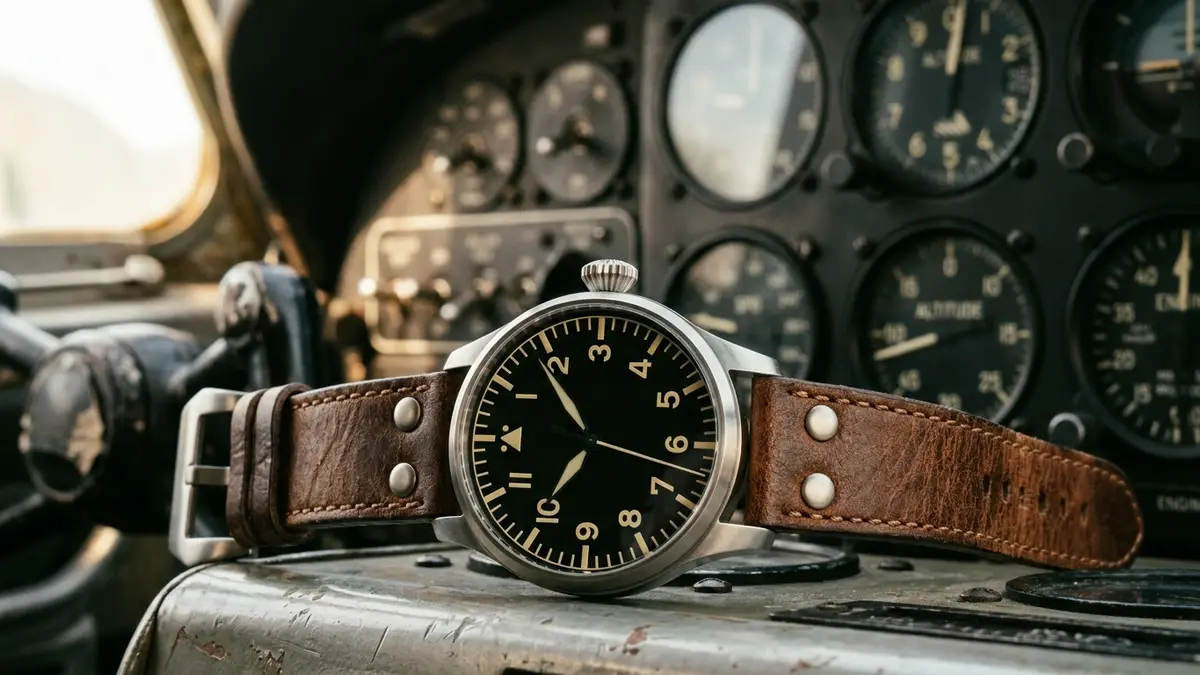
Aviation watches associated with Gagarin, now revived.
Other names
Slava, Zaria, Pobeda (Victory), Luch (Belarus, famous for one-hand watches) and Chaika.
Why collect Soviet watches?
- Affordability — genuine vintage mechanical watches often cost under $100–$300.
- History — space race, Cold War and military stories.
- Variety — thousands of dial designs, many with Soviet iconography.
- Mechanical simplicity — easy to understand and repair.
Buying tips
- Beware of "redials" and Frankenwatches — repainted dials and mismatched parts are common. Look for crisp printing and consistent ageing.
- Check the movement — ask for photos and whether it runs well.
- Buy new Vostok models from the official store or reputable dealers if you want reliability.
- Consider sanctions and shipping — availability of new Russian-made watches varies by country due to trade restrictions; check local rules.
- Budget for a service — vintage watches often need one; see new vs vintage.
FAQ
Are Vostok watches good quality?
They're simple, robust and good value, though finishing and quality control are basic. The Amphibia is a genuinely capable dive watch for its price.
What watch did Yuri Gagarin wear?
Historical accounts most commonly associate Gagarin with a Sturmanskie watch from the First Moscow Watch Factory, issued to Soviet air force pilots.