If you want your watch to be exactly right — to the second — every single day, the answer isn't a better movement. It's a connection to an external time source. That's what radio-controlled, GPS and Bluetooth watches do, and it's one of the reasons smartwatches are so popular.
Radio-controlled ("atomic") watches
These quartz watches contain a tiny antenna that receives a long-wave time signal broadcast from transmitters linked to atomic clocks. Usually during the night, the watch listens for the signal and corrects itself to the exact time and date.
| Transmitter | Location | Covers |
|---|---|---|
| WWVB | Fort Collins, Colorado, USA | North America |
| DCF77 | Mainflingen, Germany | Most of Europe |
| MSF | Anthorn, UK | UK and Ireland |
| JJY (2 stations) | Japan | Japan |
| BPC | China | China |
Watches marked "Multi-Band 6" (Casio) or similar can receive all six major signals, so they work on most of three continents. Reception can be blocked by concrete buildings; placing the watch near a window overnight usually helps.
Most radio-controlled watches are also solar powered — Casio's G-Shock GW-M5610 and Citizen's "Atomic Timekeeping" models are popular examples.
GPS and Bluetooth-synced watches
- GPS solar watches (Seiko Astron, Citizen Satellite Wave) receive time from GPS satellites anywhere on Earth and can even detect your time zone automatically — ideal for frequent flyers.
- Bluetooth watches (Casio G-Shock "Connected", Citizen Bluetooth) sync the time from your phone via an app and adjust for time zones and daylight saving time.
Smartwatches
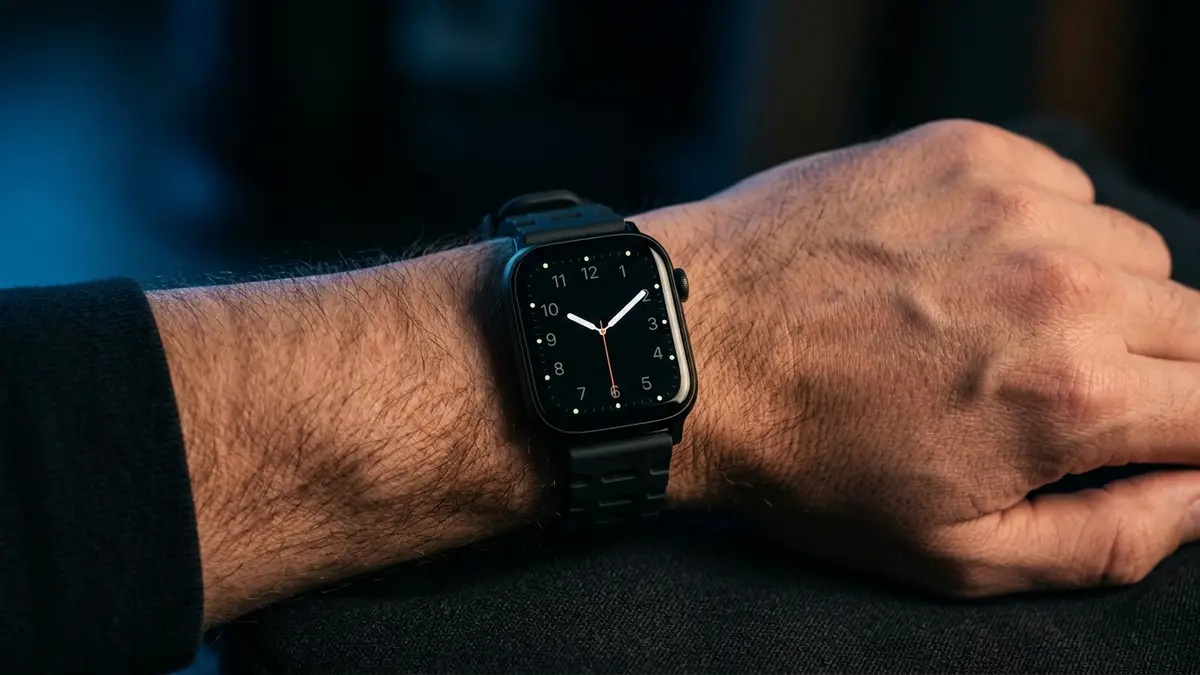
A smartwatch is essentially a small wrist computer: a touchscreen, processor, sensors and apps, connected to your phone. It tells time, but its real jobs are notifications, fitness and health tracking, payments and navigation. We cover the category in depth in smartwatches.
Smartwatch vs traditional watch
Smartwatch strengths
- Health and fitness data (heart rate, sleep, GPS routes)
- Notifications, calls, payments
- Always perfectly accurate time
- Customisable faces
Smartwatch weaknesses
- Charging every 1–3 days for most models (outdoor models last weeks)
- Obsolete in 3–5 years
- Little resale value
- Screen distraction; less formal look
Hybrid smartwatches
Hybrids look like traditional analogue watches but hide step counting, sleep tracking and notification alerts inside, with batteries lasting weeks or months. They're a good compromise for people who want some data without a screen.
Which connected watch fits you?
- Want perfect time, no fuss, no charging: radio-controlled solar (from ~$100).
- Travel constantly across continents: GPS solar.
- Train seriously for sport: a sports smartwatch from Garmin, Coros, Polar or Suunto.
- Want notifications and health data plus a classic look: a hybrid.
Many enthusiasts own both: a smartwatch for training and a mechanical watch for everything else.
FAQ
Do atomic watches work everywhere?
Only within range of a supported transmitter — mainly North America, Europe, Japan and China. Outside these areas they function as normal quartz watches. GPS-synced watches work worldwide.
Is it acceptable to wear a smartwatch with a suit?
In most business settings, a discreet smartwatch is fine. For black-tie or very formal events, a slim traditional watch — or none — is more appropriate. See our dress-code guide.