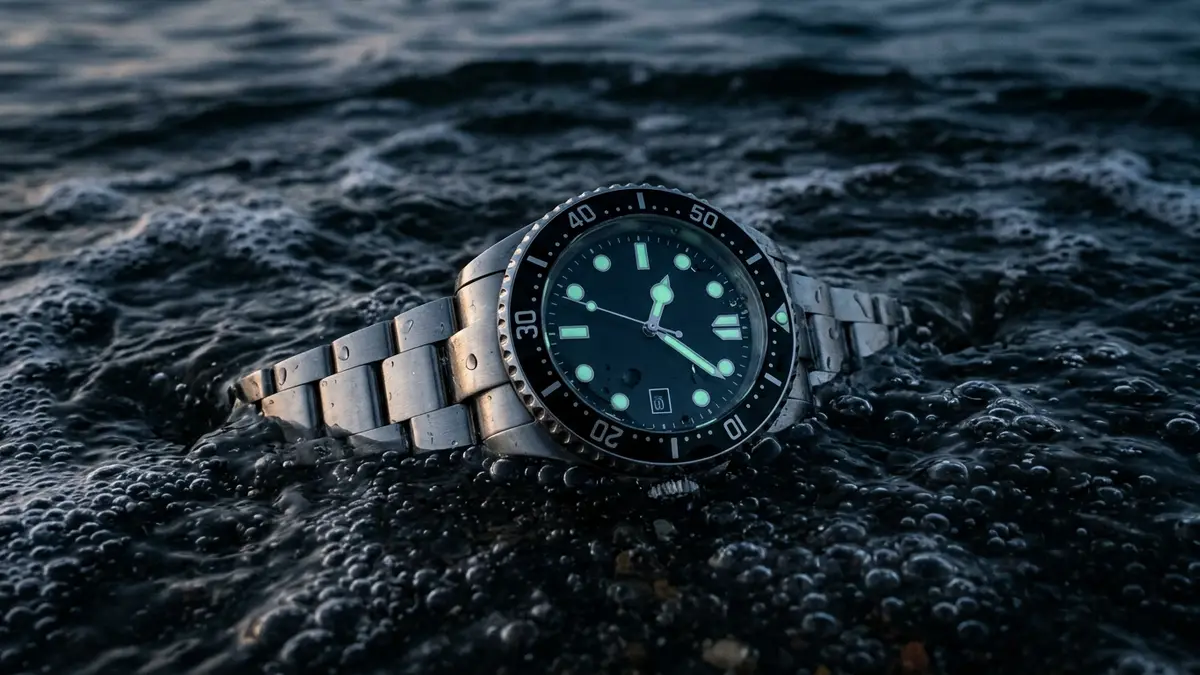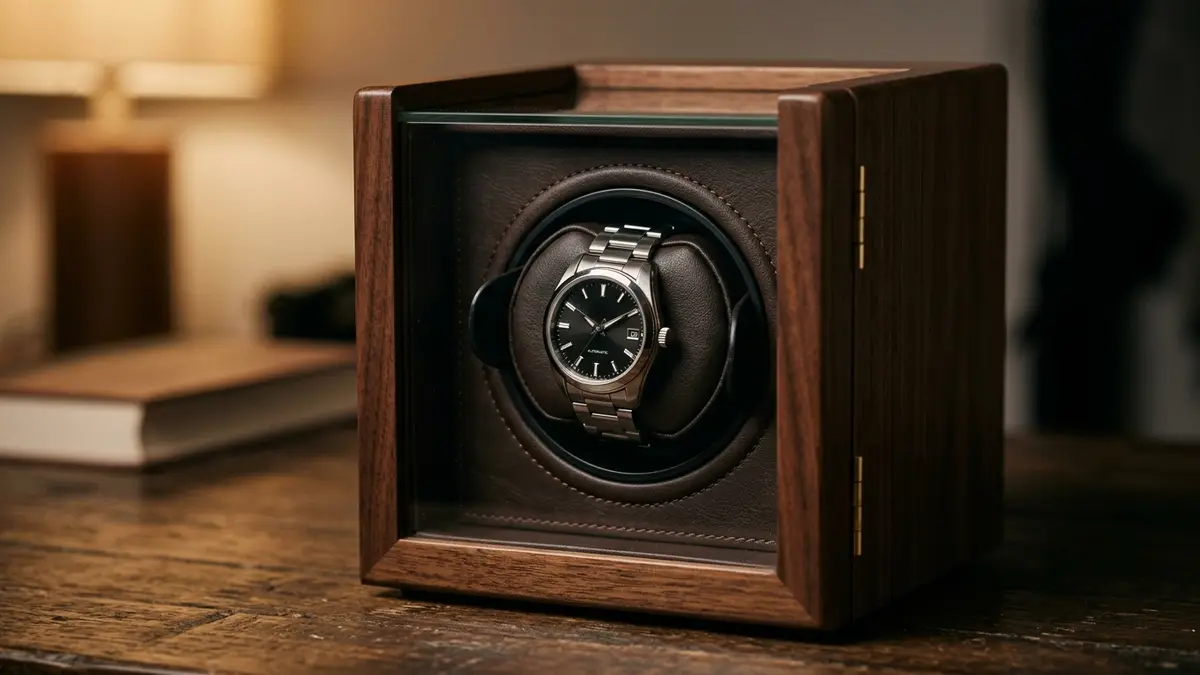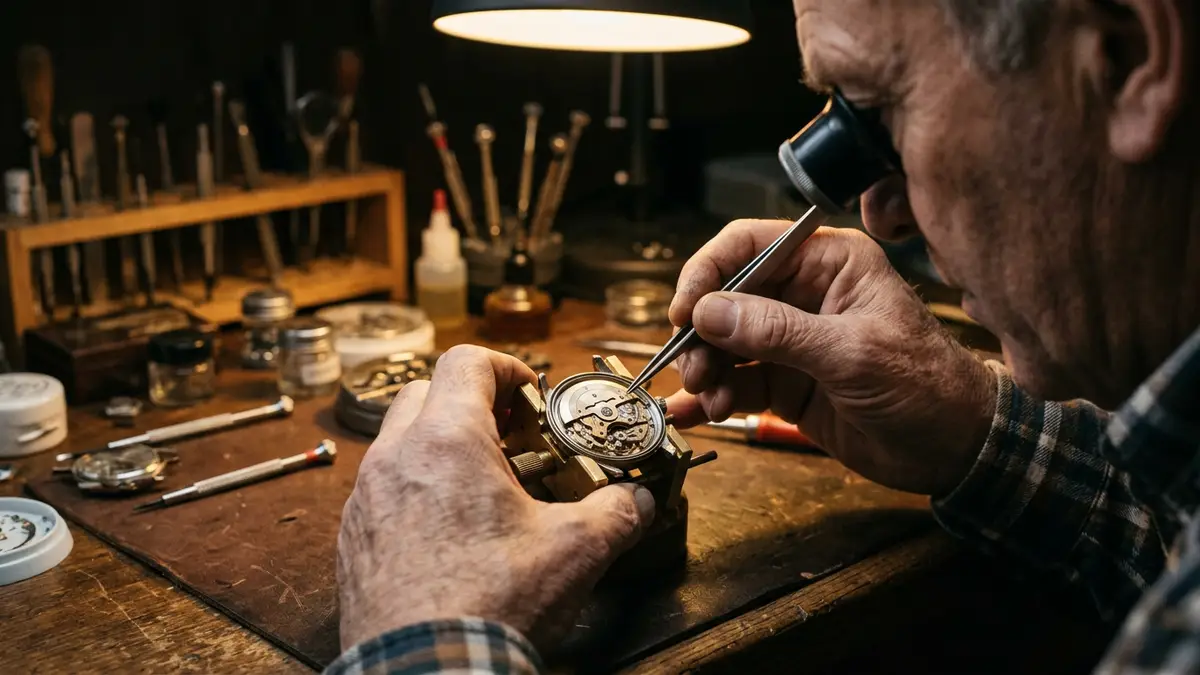
A mechanical watch is a machine with hundreds of moving parts running continuously on microscopic amounts of oil. Over time, oils dry and thicken, parts wear and gaskets age. Regular servicing keeps it accurate, water resistant and alive for generations.
How often should you service a watch?
| Watch type | Typical recommended interval |
|---|---|
| Budget automatic (Seiko NH35, Miyota) | When it shows problems; replacing the movement can be cheaper than servicing |
| Swiss/Japanese mid-range automatic | Every 5–7 years |
| Modern luxury (e.g. Rolex, Omega, Tudor) | Every 7–10 years (brands' own guidance) |
| Vintage watches | Every 3–5 years, as older designs wear faster |
| Quartz | Battery every 2–5 years; full service every ~10 years or when needed |
| Water resistance check | Every 1–2 years if you swim or dive |
Modern synthetic lubricants and materials like silicon hairsprings have stretched intervals considerably. Follow your manufacturer's recommendation — and don't ignore symptoms.
Signs your watch needs a service
- Timekeeping suddenly changes (gaining or losing much more than usual).
- Power reserve noticeably shorter than specified.
- Grinding or rough feeling when winding.
- Date doesn't change cleanly at midnight.
- Chronograph hands don't reset to zero.
- Condensation or moisture under the crystal — urgent: get it seen immediately.
- Rattling from inside the case or a loose rotor.
- Crown feels loose or won't screw down.
What a full service includes
- Inspection and diagnosis — timegrapher test, water-resistance test.
- Disassembly — the movement is taken fully apart.
- Cleaning — parts cleaned in ultrasonic baths.
- Replacement — worn parts, mainspring (often), gaskets and crown seals.
- Reassembly and lubrication — up to dozens of lubrication points with specific oils.
- Regulation — adjusted in multiple positions for accuracy.
- Case and bracelet refinishing — optional; decline polishing if you want to preserve originality.
- Water-resistance testing and final quality control over several days.
A full service typically takes 2–8 weeks, longer at busy brand service centres.
How much does servicing cost?
| Watch | Independent watchmaker | Brand service centre |
|---|---|---|
| Basic Japanese/Chinese automatic | $100–$200 (or replace movement) | $150–$300 |
| Swiss three-hand (ETA/Sellita) | $200–$400 | $300–$600 |
| Swiss chronograph (e.g. 7750) | $350–$600 | $500–$900 |
| Rolex / Omega / Tudor three-hand | $400–$700 | $600–$1,200 |
| Luxury chronograph / GMT | $600–$1,000 | $900–$1,500+ |
| Complicated (perpetual, tourbillon) | Specialist only | $2,000 to five figures |
Costs are approximate and vary by country and condition. Replacement parts (crystals, dials, bezels) are extra.
Brand service or independent watchmaker?
Brand service centre
- Genuine parts, factory standards
- Service warranty (often 2 years)
- Keeps paperwork trail for resale
- May replace original parts or polish by default — specify your wishes
Independent watchmaker
- Often cheaper and faster
- Personal relationship; more flexible
- Better for vintage preservation
- Parts access for some brands is restricted
Find a certified independent (e.g. with WOSTEP, SAWTA or AWCI training, or brand-accredited) and ask to see their workshop.
Between services
- Clean the bracelet and case gently with a soft brush and lukewarm water (if water resistant).
- Keep away from magnets — see storage and magnetism.
- Test water resistance regularly — see battery and water resistance.
- Wind and set correctly — see how to wind and set.
FAQ
What happens if I never service my watch?
It may run for years, but dried oils increase friction and wear. Eventually parts wear out, accuracy degrades and repairs become far more expensive than regular servicing.
Should I let them polish my watch during service?
For modern daily-wear watches, a light refinish is fine. For vintage or collectible watches, decline polishing to preserve original case lines and value.