Quartz watches need occasional battery changes, and all water-resistant watches need their seals maintained. Getting both right keeps your watch reliable and dry.
When to replace a watch battery
- The watch stops or loses time.
- The seconds hand jumps in 2- or 4-second steps (end-of-life indicator).
- Digital displays dim or the backlight fails.
- It's been 2–5 years (varies by model).
Replace a dead battery promptly — an exhausted cell can leak and corrode the movement.
Professional vs DIY battery change
A jeweller or watch shop typically charges $10–$50; a brand service centre more, but includes a pressure test and new gasket.
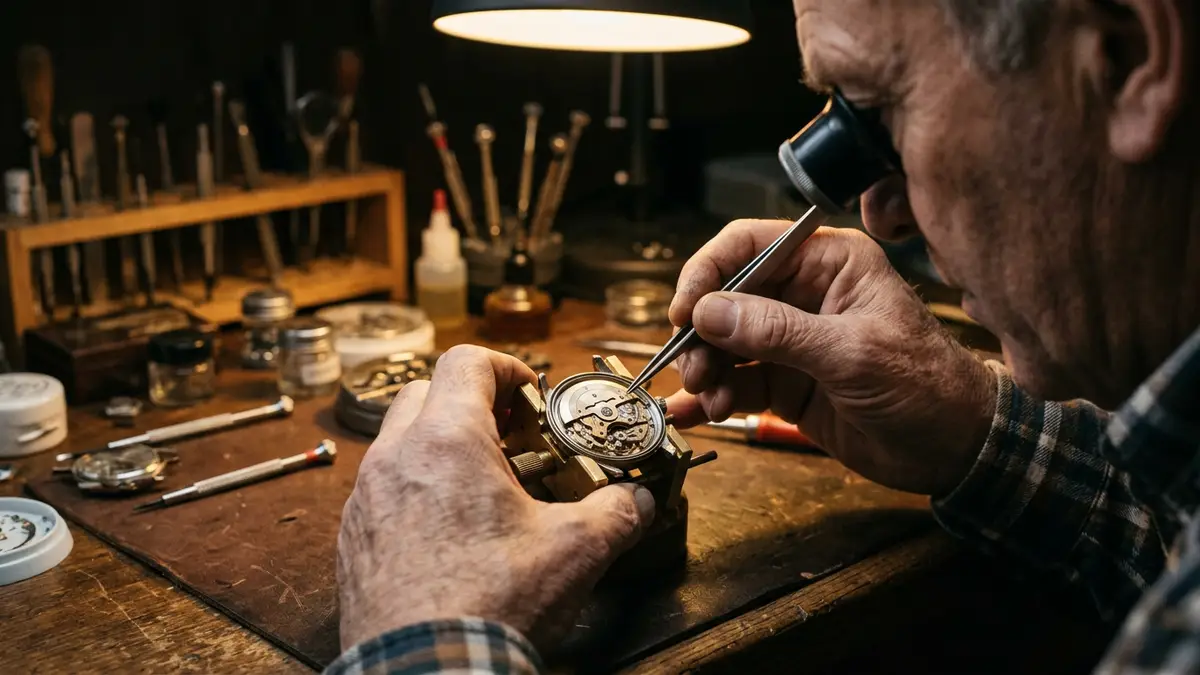
Professional
- Correct tools prevent scratches
- Gasket inspected and lubricated
- Pressure test restores water resistance confidence
- Correct battery type guaranteed
DIY risks
- Scratched casebacks and slipped tools
- Damaged gaskets = lost water resistance
- Static or touching the circuit can harm the movement
- Some watches need a reset procedure after battery change
If you DIY an inexpensive watch: use the correct silver-oxide battery (e.g. SR626SW / 377), handle it with plastic tweezers, don't touch the circuit, and lightly grease the gasket with silicone before closing. For anything valuable or water resistant, use a professional.
Understanding water resistance ratings
Water resistance ratings describe the static pressure a new watch withstood in a laboratory test — not a depth you can safely dive to. Real-world movement, temperature changes and ageing gaskets reduce protection.
| Marking | Hand washing, rain | Shower | Swimming | Snorkelling | Scuba diving |
|---|---|---|---|---|---|
| "Water Resistant" / 30 m / 3 bar | ✔ | ✖ | ✖ | ✖ | ✖ |
| 50 m / 5 bar | ✔ | ✖ | Brief, careful | ✖ | ✖ |
| 100 m / 10 bar | ✔ | Not advised | ✔ | ✔ | ✖ |
| 200 m / 20 bar | ✔ | Not advised | ✔ | ✔ | ✔ Recreational |
| ISO 6425 "Diver's" | ✔ | Not advised | ✔ | ✔ | ✔ Certified |
Showers are "not advised" even for divers because hot water, steam, soap and shampoo degrade gaskets over time.
What threatens water resistance
- Ageing gaskets — rubber dries and cracks over years.
- Opening the case — battery changes or repairs disturb seals.
- Unscrewed crowns and pressed pushers underwater.
- Heat — saunas, hot tubs and hot showers.
- Chemicals — soap, chlorine, solvents, perfume, sunscreen.
- Impacts — can crack crystals or dislodge seals.
How water resistance is tested
- Dry (air) pressure test — the watch is placed in a chamber and pressurised; sensors detect case deformation or leaks. Safe for all watches.
- Wet test — the watch is pressurised under water; bubbles indicate leaks.
- Condensation test — a warm watch is touched with a cold drop of water; fogging reveals moisture inside.
Test every 1–2 years if you swim with your watch, and always after a battery change or case opening.
What to do if water gets inside
- If you see fog or droplets under the crystal, take the watch to a watchmaker immediately.
- Don't try to "dry it out" in rice or on a radiator — heat can damage it and moisture continues to corrode.
- If you must wait, unscrew/pull out the crown to let air circulate in a warm, dry place and seek help within a day or two.
After swimming in the sea or pool
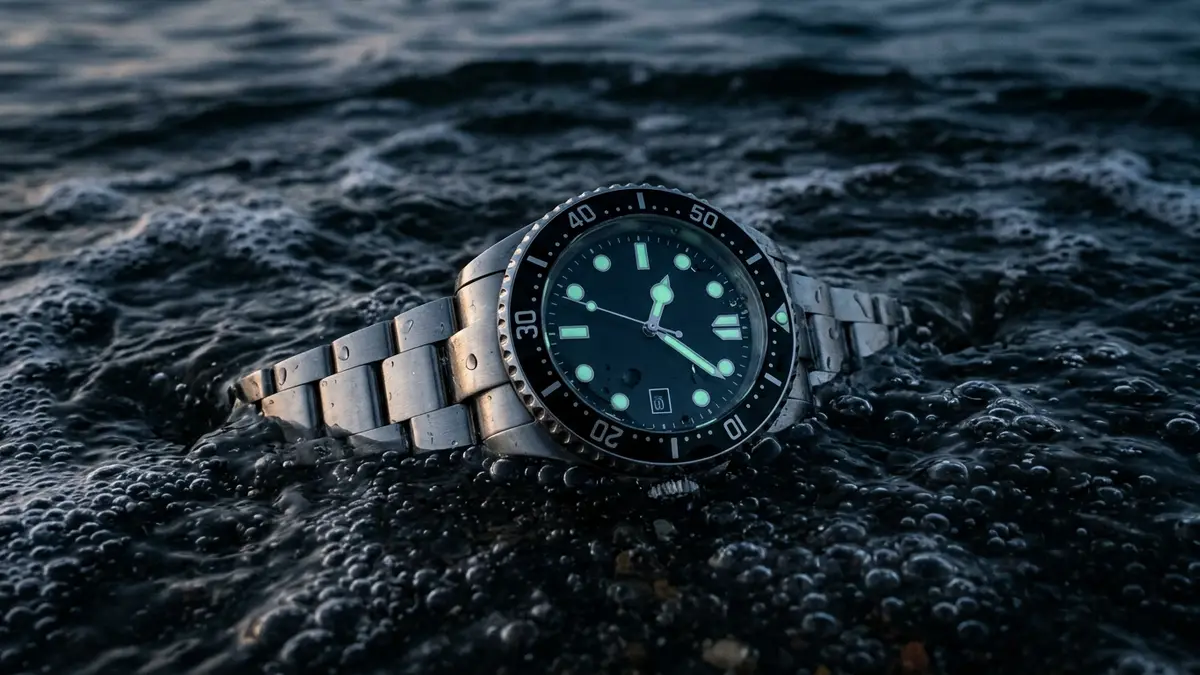
Rinse the watch with fresh water with the crown screwed down, rotate the bezel under running water to flush salt and sand, then dry with a soft cloth.
FAQ
How long does a watch battery last?
Typically 2–5 years for analogue quartz, sometimes up to 10 years for low-power digital watches. Features like backlights and alarms shorten life.
Does a battery change affect water resistance?
It can, because the case is opened. A professional change should include checking the gasket and a pressure test to confirm water resistance.