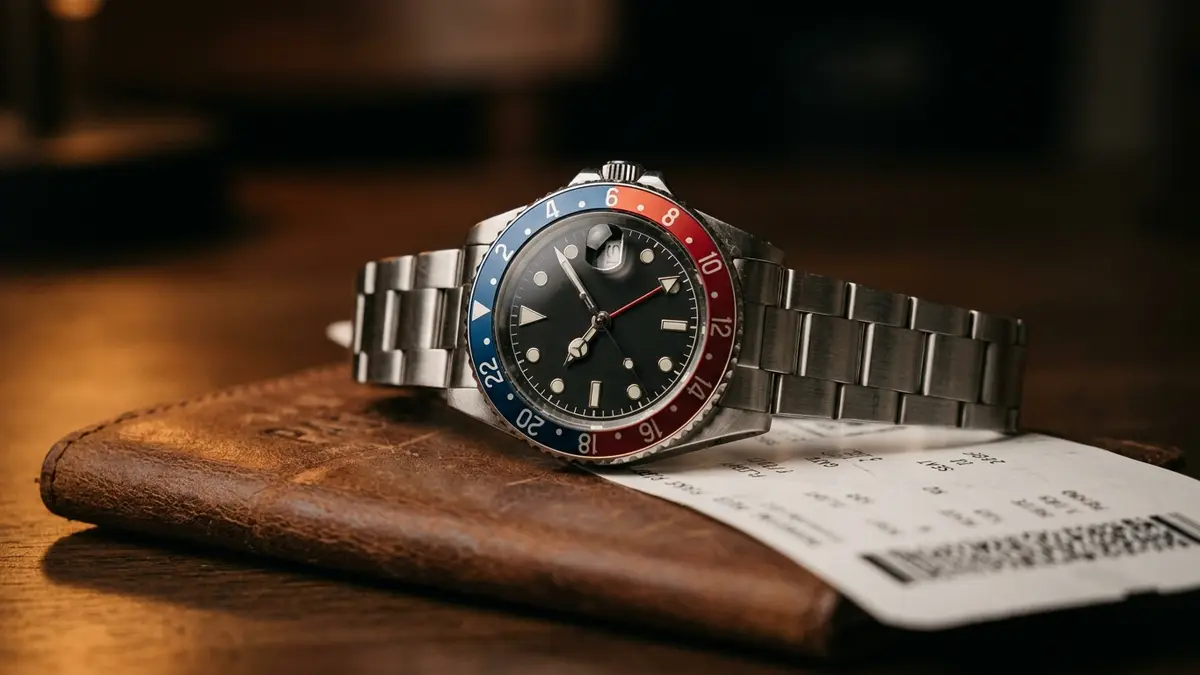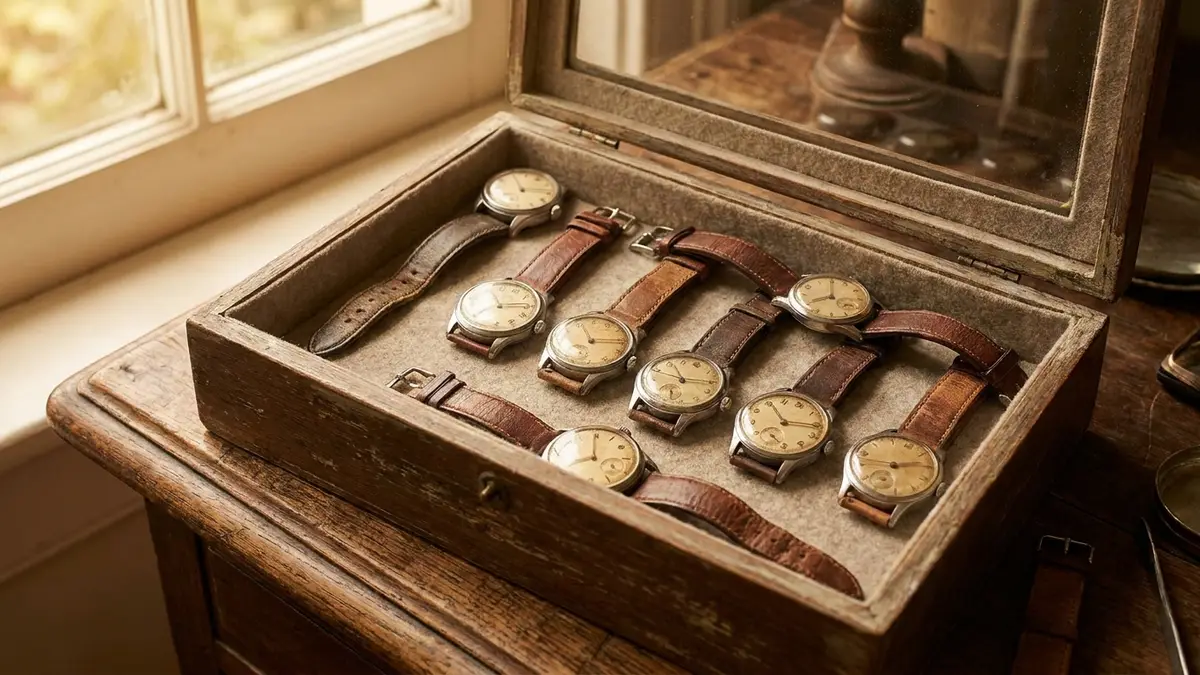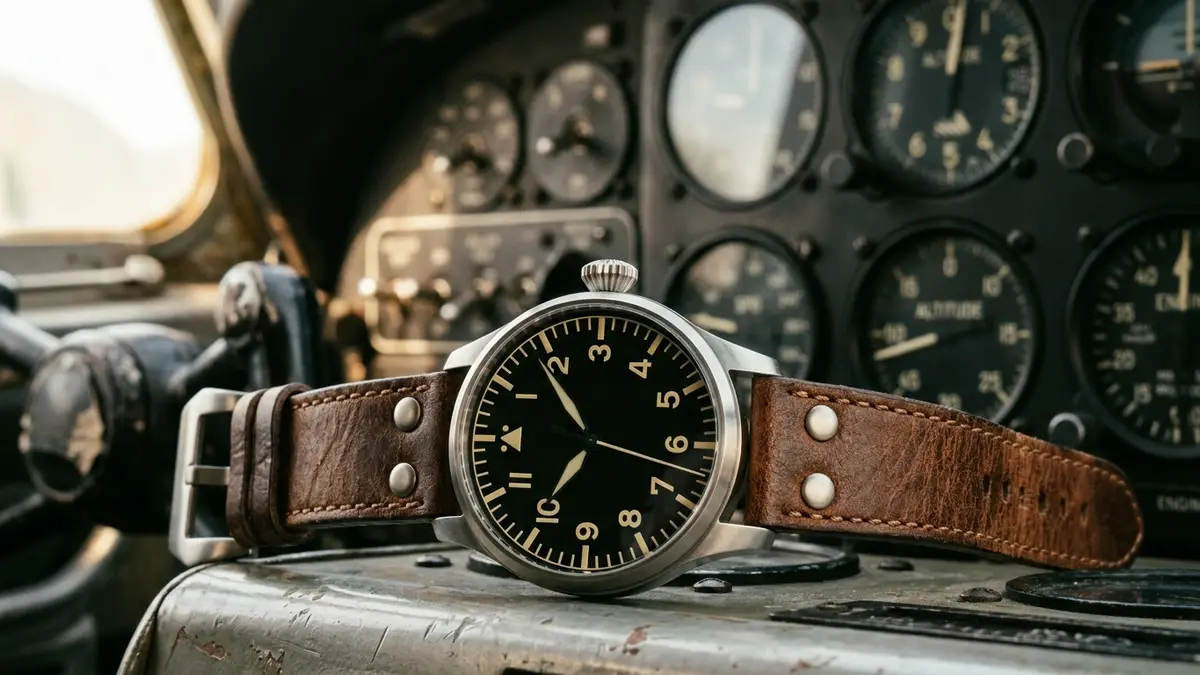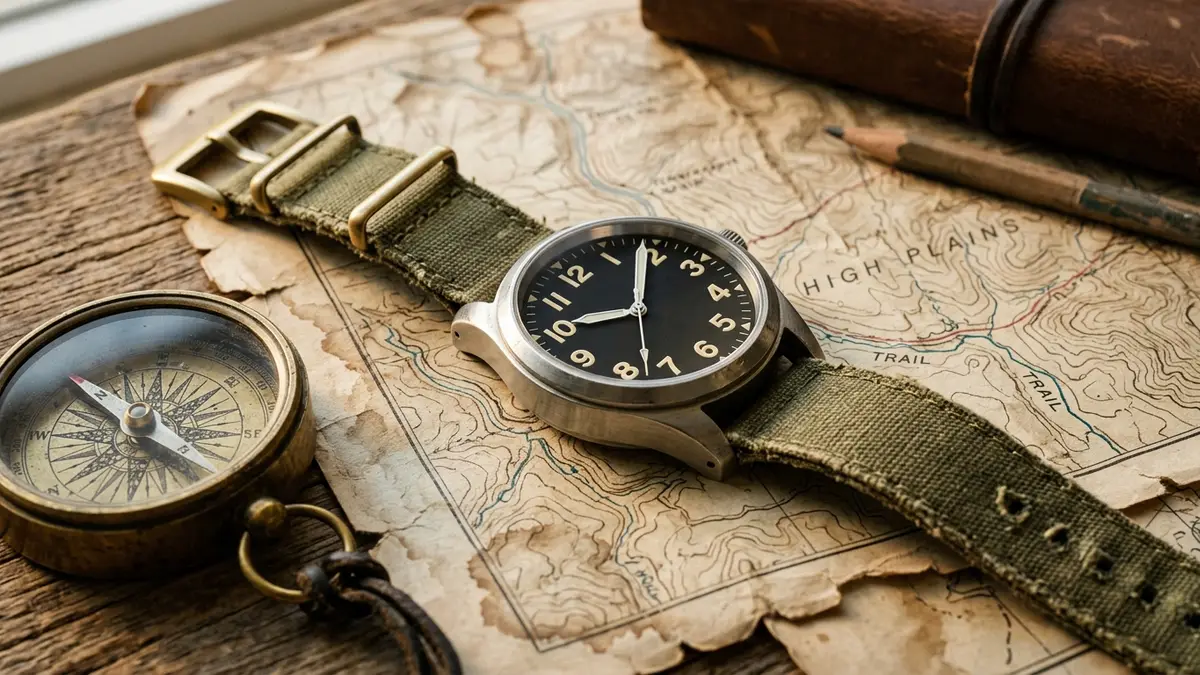
America once led the world in industrial watchmaking. Its factories invented mass production with interchangeable parts, and "railroad grade" pocket watches kept trains running safely across a continent. Although most production later moved overseas, American brands remain influential — and a new wave of US makers is reviving domestic watchmaking.
A short history
In 1850, Aaron Dennison and partners founded what became the Waltham Watch Company, pioneering machine-made watches with interchangeable parts. Waltham and Elgin produced tens of millions of watches, far outpacing Swiss hand production. After a deadly 1891 train collision was blamed on a faulty watch, railroads imposed strict "railroad grade" standards — and Hamilton (founded 1892) excelled at meeting them.
In the 20th century, American watches went to war, to the poles and into space. But competition from Switzerland and Japan, and the Quartz Crisis, closed most historic US factories by the 1970s–80s.
Timex
Timex traces its roots to the Waterbury Clock Company, founded in Connecticut in 1854, which made the famous "dollar watches". Timex famously advertised that its watches "take a licking and keep on ticking". Today it offers superb affordable watches:
- Weekender and Expedition — everyday field watches with Indiglo backlight.
- Marlin — mid-century reissues, including hand-wound versions.
- Q Timex — 1970s-style quartz reissues.
- Ironman — the classic sports digital.
- Giorgio Galli designs — Timex's Italian-designed premium automatics.
Bulova
Founded in New York in 1875 by Joseph Bulova, the brand aired the world's first television commercial in 1941. In 1960 it launched the Accutron, using a tuning fork instead of a balance wheel — accurate to about a minute a month and famous for its hum instead of a tick. A Bulova chronograph was worn on the moon during Apollo 15, reissued today as the Lunar Pilot. Owned by Citizen since 2008, Bulova's high-performance 262 kHz quartz watches offer excellent accuracy.
Hamilton
Born in Lancaster, Pennsylvania, Hamilton supplied railroads and armed forces, made the first electric watch (the Ventura, 1957, worn by Elvis Presley) and co-developed the first automatic chronograph movement in 1969. It moved to Switzerland and is now part of Swatch Group, but its designs remain proudly American. Its watches appear in hundreds of films. See Swiss brands and field watches.
Other historic names
- Waltham and Elgin — prized by vintage collectors; the names now appear on other companies' products.
- Benrus — supplier of military watches, now revived.
- Accutron — spun off as its own brand with electrostatic movements.
The modern American revival
A new generation of brands is assembling, and in some cases manufacturing, watches in the US:
- Shinola (Detroit) — assembles quartz and automatic watches in the US.
- Weiss (Los Angeles) — field watches with increasing US-made content.
- RGM (Pennsylvania) — among the few US makers producing in-house movements.
- Vortic (Colorado) — converts vintage American pocket-watch movements into wristwatches.
- Brew, Lorier, Nodus, Monta, Halios — popular American-run microbrands; see microbrands.
FAQ
Are any watches still made in the USA?
A handful of companies assemble or make watches in the US, and a very small number, such as RGM, produce their own movements. Most American-branded watches use Swiss, Japanese or Chinese movements.
Is Hamilton American or Swiss?
Both: it was founded in the US in 1892 and moved production to Switzerland. It's now a Swiss brand within Swatch Group with strong American heritage.