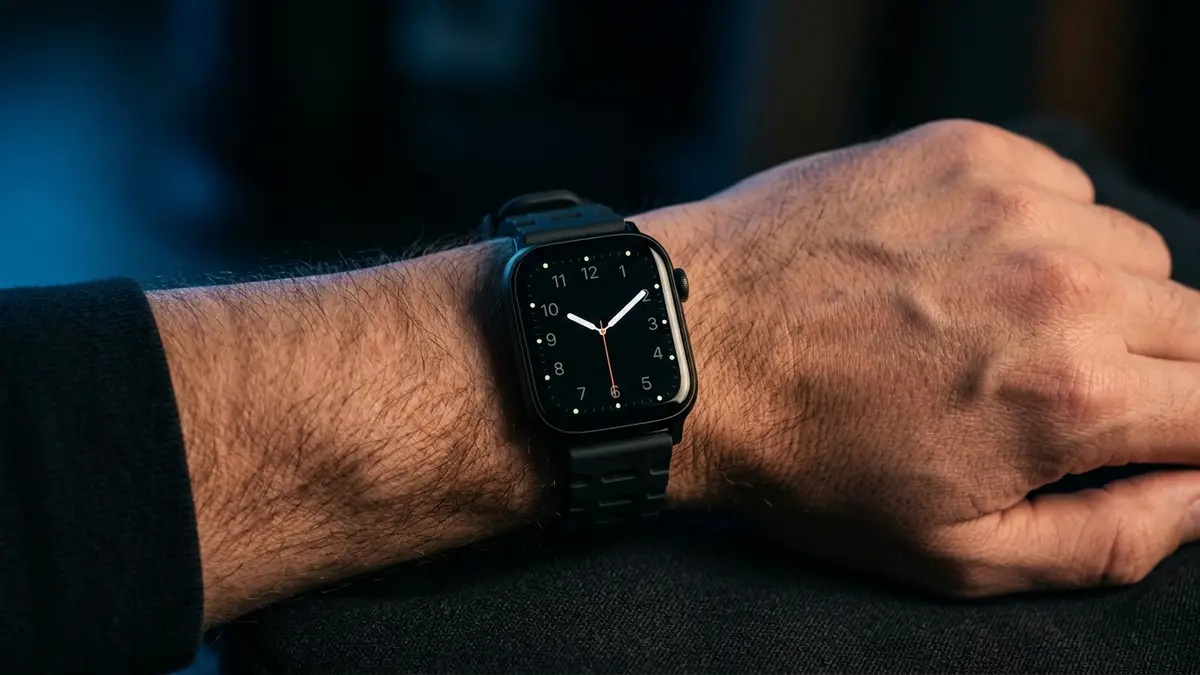
A solar watch is a quartz watch that never needs a battery change in the usual sense. A photovoltaic cell hidden beneath a slightly translucent dial converts any light — sunlight or indoor lighting — into electricity, which charges a rechargeable cell. Citizen popularised the technology in 1976 and brands it Eco-Drive; Seiko, Casio (Tough Solar) and others have their own versions.
How it works
- Light passes through the dial to a solar cell beneath it.
- The cell generates current that charges a lithium-ion or manganese-titanium secondary battery (capacitor).
- The charged cell powers a normal quartz movement.
- When fully charged, the watch runs in total darkness for months — often 6 months, and up to several years in power-save mode.
Many solar watches enter a power-save mode in darkness: the seconds hand stops while the watch keeps counting time internally, then snaps back to the correct time when light returns.
Advantages
- No routine battery changes — fewer case openings means water resistance lasts longer.
- Quartz accuracy without the maintenance.
- Eco-friendly — fewer disposable batteries.
- Great value — excellent solar watches start under $200.
Limitations
- The rechargeable cell degrades slowly; after 10–20 years it may need replacing (a routine job for a service centre).
- Dials must let light through, so deep glossy black or enamel dials are rare.
- Kept in a drawer for years, a solar watch can fully discharge and needs a long recharge in bright light.
How long to charge a solar watch
| Light source | Approx. illuminance | Time to run one day (typical) |
|---|---|---|
| Direct summer sun | ~100,000 lux | Seconds to minutes |
| Cloudy day outdoors | ~10,000 lux | A few minutes |
| Office lighting | ~500 lux | A few hours |
Figures vary by model — check your manual. Avoid leaving a watch on a hot car dashboard; heat above ~60 °C can damage the cell.
Recommended solar watches
- Citizen Promaster Dive BN0150 (~$260) — ISO-rated 200 m diver that never needs a battery.
- Casio G-Shock GW-M5610 (~$140) — solar plus atomic time sync.
- Seiko Prospex Solar divers (~$300–$500) — Seiko's classic tool looks, solar powered.
- Citizen Eco-Drive Chandler / Garrison (~$150–$250) — affordable field watches.
- Citizen Caliber 0100 (~$7,000+) — the most accurate light-powered analogue watch, rated ±1 second per year.
FAQ
Do solar watches work with indoor light?
Yes. Indoor light charges them more slowly than sunlight, but regular wear under office lighting is usually enough to keep them running.
How long does a solar watch last?
The movement can last decades. The rechargeable cell typically lasts 10–20 years before it may need replacement.